
More than half of american households now use home fragrance products daily, revealing just how powerful scent is in shaping mood and comfort. For city dwellers craving a cozy retreat from urban life, choosing the right seasonal aroma can deeply influence well-being. This guide unpacks the hidden science and myths behind seasonal scents, helping aromatherapy lovers make smarter choices for every season and setting.
Table of Contents
- Seasonal Scents Defined and Common Myths
- Types of Seasonal Scents and When to Use
- How Seasonal Aromas Influence Mood
- Practical Tips for Choosing Each Season
- Mistakes to Avoid With Seasonal Scents
Key Takeaways
| Point | Details |
|---|---|
| Seasonal Scents Are More Than Aesthetics | They represent complex emotional and cultural experiences linked to environmental changes. |
| Scents Influence Mood | Seasonal aromas can modulate emotions and enhance psychological well-being through neurological pathways. |
| Choosing Scents Requires Thoughtfulness | Selecting appropriate scents involves considering personal preferences and seasonal contexts to create a harmonious ambience. |
| Avoid Common Mistakes | Mind the concentration and appropriateness of scents as oversaturation or mismatched profiles can diminish the intended emotional impact. |
Seasonal Scents Defined and Common Myths
Seasonal scents represent more than just pleasant aromas; they are complex cultural and emotional experiences that connect us deeply to natural rhythms and traditions. Understanding these fragrances goes beyond simple decoration, revealing rich narratives about human perception and sensory memory.
Traditionally, seasonal scents have profound psychological and cultural significance. Seasonal fragrance transitions reflect intricate connections between human emotions and environmental changes. Scents like cinnamon, pine, frankincense, and myrrh are not random selections but carefully chosen representations of specific temporal experiences. Each fragrance carries historical weight, evoking memories and triggering emotional responses tied to particular times of year.
Common myths about seasonal scents often misunderstand their deeper purpose. Many people assume these fragrances are purely aesthetic, but research demonstrates they serve complex psychological functions. Contrary to popular belief, seasonal scents are not simply marketing strategies but powerful sensory triggers that help humans process and celebrate cyclical changes. They represent a nuanced language of emotion, connecting us to natural world transitions through olfactory experiences.
Pro tip: Experiment with layering complementary seasonal scents to create more complex and immersive home fragrance experiences that evolve throughout the year.
Types of Seasonal Scents and When to Use
Seasonal scents represent a sophisticated approach to home fragrance, with distinct aromatic profiles carefully aligned to specific times of year. Understanding these nuanced scent categories allows homeowners to create immersive sensory experiences that reflect the changing environmental and emotional landscapes throughout different seasons.
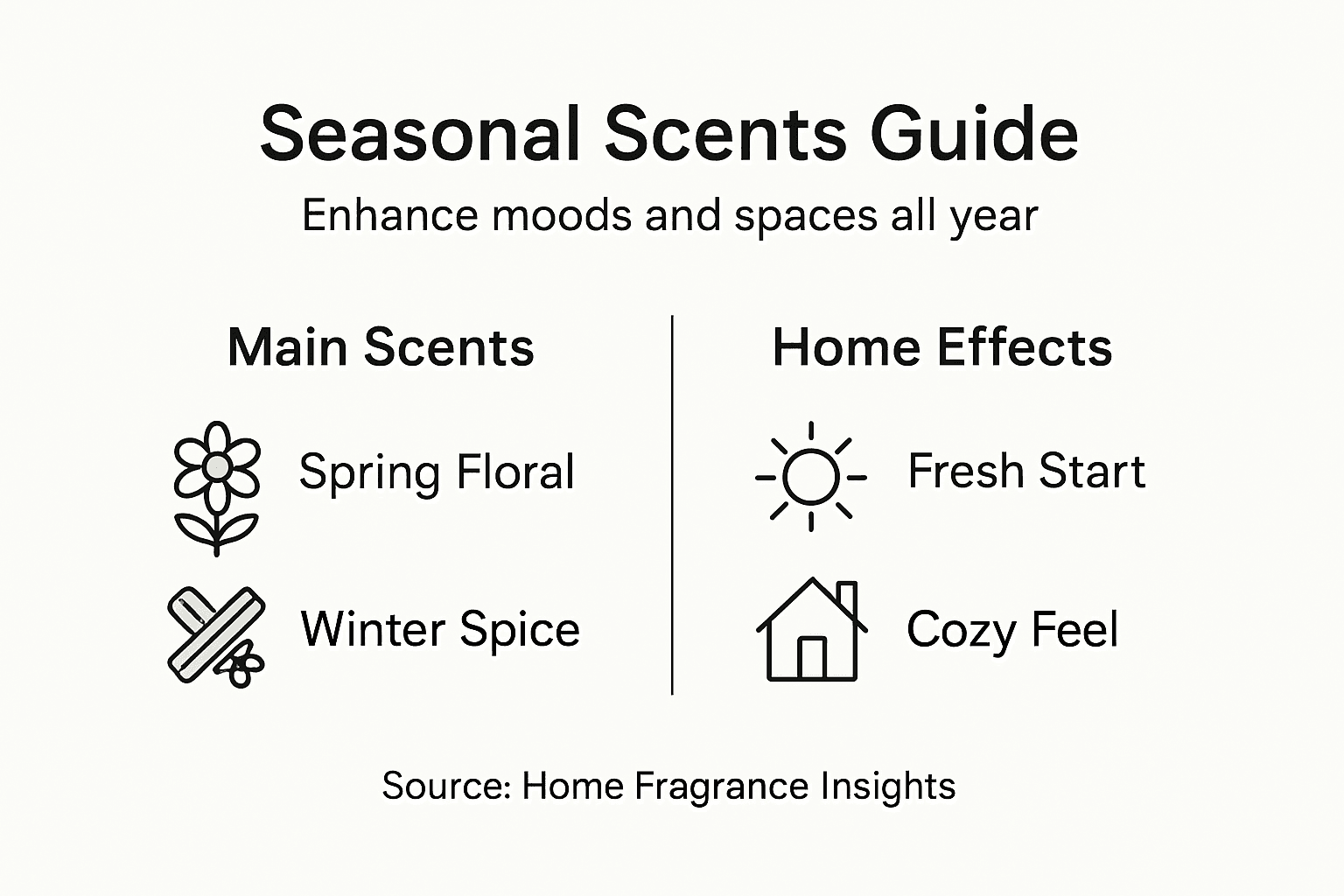
Spring scents typically feature light, fresh, and rejuvenating fragrances that capture the essence of renewal. Floral notes like jasmine, lilac, and cherry blossom dominate, complemented by green and herbal undertones that evoke new growth. Summer scents shift towards brighter, more energetic profiles with citrus, tropical, and aquatic notes that reflect sunshine and outdoor adventures. Seasonal fragrance collections often incorporate these vibrant scent profiles to create an atmosphere of warmth and vitality.
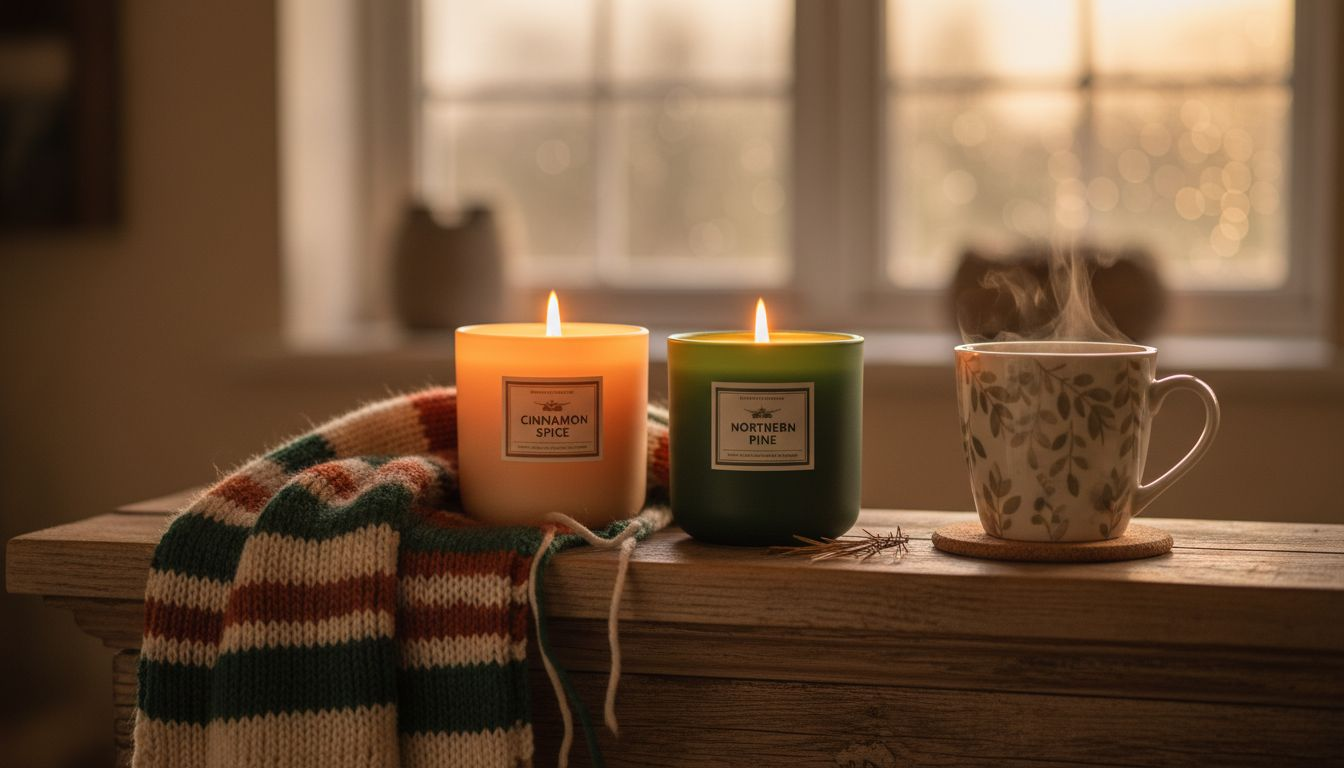
Autumn and winter scents embrace deeper, more complex aromatic experiences. Warm spices like cinnamon, nutmeg, and clove create a sense of comfort, while woody notes such as cedar, sandalwood, and pine evoke feelings of intimacy and reflection. These richer fragrances mirror the introspective nature of colder months, providing a sensory backdrop that complements indoor living and holiday celebrations.
Pro tip: Rotate your home fragrances every 6-8 weeks to maintain a dynamic sensory environment that feels fresh and intentionally curated.
Here’s a quick comparison of popular seasonal scents and their psychological effects:
| Season | Common Scents | Psychological Effects | Atmosphere Created |
|---|---|---|---|
| Spring | Jasmine, lilac | Hope, renewal | Fresh, uplifting |
| Summer | Citrus, marine | Energy, excitement | Vibrant, outdoorsy |
| Autumn | Cinnamon, cedar | Comfort, introspection | Cozy, reflective |
| Winter | Pine, vanilla | Warmth, nostalgia | Enveloping, festive |
How Seasonal Aromas Influence Mood
Scents possess remarkable psychological power, capable of transforming emotional landscapes through complex neurological interactions. Unlike visual or auditory stimuli, fragrances create immediate and profound connections with our limbic system, triggering memories, emotions, and physiological responses that can dramatically shift our psychological state.
Scientific research on fragrance psychology demonstrates that seasonal aromas act as powerful mood modulators. Spring scents like fresh grass and floral notes can evoke feelings of hope and renewal, while autumn fragrances with warm spices and woody undertones encourage introspection and comfort. Winter scents featuring pine, cinnamon, and vanilla often generate feelings of warmth and nostalgia, counteracting seasonal emotional challenges like depression and anxiety.
The neurological mechanisms behind scent-based mood regulation are fascinating. Olfactory receptors have direct neural pathways to brain regions controlling emotion and memory, allowing fragrances to bypass cognitive filters and create instantaneous emotional responses. This explains why certain seasonal aromas can rapidly shift psychological states, providing natural and immediate emotional regulation without pharmaceutical interventions.
Pro tip: Create a personal scent journal to track how different fragrances specifically impact your emotional well-being throughout the year.
Practical Tips for Choosing Each Season
Selecting the perfect seasonal scent requires a nuanced approach that balances personal preference, environmental context, and emotional resonance. Each season presents unique opportunities to transform home ambiance through carefully chosen fragrances that reflect the specific mood and atmospheric qualities of that time of year.
Seasonal fragrance selection strategies emphasize the importance of understanding how different scent profiles interact with temperature, humidity, and personal body chemistry. Spring demands light, fresh fragrances like green tea, subtle florals, and crisp herbal notes that capture renewal and growth. Summer calls for bright, energetic scents with citrus, tropical fruit, and marine undertones that evoke sunshine and outdoor adventure. Autumn requires warmer, more complex aromas featuring spices, woody elements, and rich botanical notes that suggest comfort and introspection.
When choosing seasonal scents, consider multiple layering techniques to create depth and complexity. Start with a base fragrance that represents the season’s core essence, then add complementary notes that enhance and modify the primary scent. Winter might combine vanilla and cedar, while summer could blend bergamot with light marine accords. Pay attention to concentration levels, understanding that lighter eau de toilette works better in warmer months, while more concentrated perfume oils suit cooler seasons.
Pro tip: Invest in sample sizes or discovery sets to experiment with different seasonal fragrances before committing to full-sized products.
Mistakes to Avoid With Seasonal Scents
Selecting seasonal fragrances is an art form that requires careful consideration and strategic planning. Many homeowners unknowingly sabotage their home ambiance by making common mistakes that can diminish the intended emotional and sensory impact of their chosen scents.
One of the most prevalent errors is oversaturating home spaces with fragrance. Intensity matters significantly - a fragrance that overwhelms can create sensory fatigue, causing people to become desensitized to the scent or experience discomfort. Instead, aim for subtle, balanced aromatic experiences that gently enhance the environment without dominating it. This means carefully selecting fragrance concentrations appropriate to room size, using diffusers with adjustable settings or candles with moderate scent throw.
Another critical mistake involves mismatching scent profiles with seasonal expectations. Each season carries unique atmospheric qualities that demand specific fragrance characteristics. Spring demands light, fresh notes that symbolize renewal, while winter requires deeper, warmer aromas that create a sense of comfort. Randomly selecting fragrances without considering their contextual appropriateness can create cognitive dissonance, making the home feel emotionally disconnected from its natural surroundings.
Mistakes to avoid when choosing home fragrances:
| Mistake | Why It Happens | Impact on Ambiance | Prevention Tip |
|---|---|---|---|
| Overpowering fragrance | Using high concentration | Causes sensory fatigue | Use subtle diffusers |
| Mismatched seasonal scent | Ignoring context/season | Creates emotional disconnect | Select scents seasonally |
Pro tip: Always test fragrances in small quantities first and observe how they interact with your specific living space before committing to full-sized products.
Elevate Your Home Ambiance with Perfect Seasonal Scents
Choosing the right scent for each season can transform your home into a sanctuary that reflects the natural rhythms and emotional qualities of the year. If you have ever struggled to find fragrances that truly capture the mood of spring freshness or winter warmth this is your solution. Our collection understands the importance of subtle aromatic balance and emotional connection, helping you avoid common mistakes like overpowering scents or mismatched seasonal notes.

Discover expertly curated options from our Fragrances Collection and explore the art of layering with elegant choices in our Reed Diffusers Collection. For convenient variety, check out our thoughtfully assembled Bundles designed to refresh your space as the seasons change. Visit Aromel Scents now to find your perfect seasonal scent and enjoy free shipping on orders over $50. Embrace the emotional power of fragrance and create your personalized sensory journey today.
Frequently Asked Questions
What are seasonal scents and their significance?
Seasonal scents are fragrances that are carefully chosen to align with specific times of the year. They evoke emotional responses and connect us to natural rhythms, reflecting psychological and cultural significance.
How can seasonal scents influence my mood?
Seasonal scents can act as mood modulators, triggering memories and emotions through direct neural pathways to areas of the brain that control feelings. For example, spring scents can evoke hope, while autumn fragrances can promote introspection.
What are some tips for choosing the right seasonal scent?
When selecting seasonal scents, consider the essence of each season—light and fresh for spring, vibrant and energetic for summer, warm and comforting for autumn, and deep and nostalgic for winter. Layer scents for complexity and ensure concentrations match the appropriate room size.
What mistakes should I avoid when using seasonal scents?
Common mistakes include over saturating spaces with overpowering fragrances and mismatching scent profiles with the season. These can lead to sensory fatigue or create emotional disconnection. It’s best to test fragrances in small amounts first to see how they interact with your environment.
Recommended
- Seasonal Fragrance: Enhancing Home Ambiance Year-Round – Aromel
- Seasonal Scents Explained: Complete Guide for Homes – Aromel
- How to Style With Scented Candles for Home Ambiance – Aromel
- 7 Candle Scent Types to Transform Your Home Ambiance – Aromel
- Understanding Essential Oils Good for Hair: Nature’s Solutions | MyHair