
Most American households underestimate the impact seasonal fragrances have on mood and well-being. Studies show that scent can shape emotional perception by as much as 75 percent, influencing how comfortable and refreshed we feel in our own homes. Selecting the right fragrance is about more than personal taste—it is a thoughtful way to create a living atmosphere that feels in tune with nature’s cycles. Discover how choosing carefully curated scents for each season elevates your everyday environment.
Table of Contents
- Defining Seasonal Fragrance And Common Misconceptions
- Types Of Seasonal Scents For Each Season
- Key Characteristics Of Seasonal Fragrances
- Choosing The Right Seasonal Fragrance For Your Home
- Common Mistakes When Selecting Seasonal Scents
Key Takeaways
| Point | Details |
|---|---|
| Understand Seasonal Fragrances | Seasonal fragrances enhance emotional wellness and create specific atmospheres that resonate with the surrounding environment. |
| Select Appropriate Scents | Choose fragrances that complement seasonal changes, utilizing warm, rich scents in winter and fresh, light fragrances in summer. |
| Consider Room Dynamics | Match fragrances to the function and mood of each room to ensure a harmonious and inviting atmosphere throughout the home. |
| Avoid Common Mistakes | Be mindful of fragrance intensity and psychological impact to prevent sensory dissonance and create a cohesive sensory experience. |
Defining Seasonal Fragrance and Common Misconceptions
Fragrances are not just scents, but powerful sensory experiences that transform home atmospheres throughout the year. Seasonal scent selections reflect deeper emotional connections with environmental changes, creating unique ambiances that resonate with our internal rhythms.
Contrary to popular belief, seasonal fragrances are not arbitrary choices but carefully curated sensory experiences. Winter calls for warm, rich aromas like cedar and cinnamon that evoke comfort, while summer demands lighter, fresher notes such as citrus and marine scents that feel crisp and invigorating. Many homeowners mistakenly believe any fragrance works year-round, but expert research suggests that understanding home fragrance nuances can dramatically enhance emotional wellness and environmental perception.
The science behind seasonal fragrances is rooted in psychological and environmental responses. Humans have intrinsic connections to scent memories, with certain fragrances triggering specific emotional states tied to seasonal experiences. Spring might invite floral and green notes that symbolize renewal, whereas autumn welcomes spicy, woody undertones representing transition and introspection. These sensory signals go beyond mere decoration, functioning as sophisticated emotional communication tools that subtly shape our living environments.
Pro Seasonal Scent Selection Tip: Rotate your home fragrances quarterly, selecting scents that complement the natural atmospheric shifts and create a harmonious sensory journey through the year.
Types of Seasonal Scents for Each Season
Each season offers a unique opportunity to transform home ambiance through carefully selected fragrances that capture the essence of environmental shifts. Candle scent types can dramatically influence the mood and atmosphere of living spaces, creating sensory experiences that reflect the natural world around us.
Spring fragrances typically embrace light, fresh, and crisp notes that symbolize renewal. Think delicate floral scents like lavender, jasmine, and cherry blossom, which evoke the gentle awakening of nature. These fragrances often incorporate green herbal undertones that represent new growth and rejuvenation. Summer demands bright, energetic aromas such as citrus, marine, and tropical fruit scents that capture the season’s vibrant spirit. Crisp cucumber, zesty lime, and ocean-inspired fragrances create an atmosphere of coolness and relaxation.
Autumn introduces warmer, more complex scent profiles that mirror the season’s transitional nature. Rich woody notes like sandalwood, cedar, and pine blend with spicy accents of cinnamon, nutmeg, and clove. These deeper fragrances create a sense of warmth and introspection, perfectly complementing the changing landscape. Winter calls for the most intense and comforting scents - think robust aromas of vanilla, amber, smoky woods, and festive spices that provide a sense of shelter and intimacy during the coldest months.
Pro Seasonal Scent Matching Tip: Create a rotating fragrance collection that includes at least one signature scent for each season, allowing you to seamlessly transition your home’s sensory experience throughout the year.
Here’s a quick comparison of typical fragrance notes and their psychological impact by season:
| Season | Core Fragrance Notes | Emotional Effect | Ideal Home Area |
|---|---|---|---|
| Spring | Lavender, Jasmine, Green | Renewal, Uplifted Mood | Bedroom, Entryway |
| Summer | Citrus, Marine, Cucumber | Energy, Refreshment | Kitchen, Living Room |
| Autumn | Cedar, Nutmeg, Clove | Coziness, Reflection | Office, Hallway |
| Winter | Vanilla, Amber, Spices | Comfort, Warmth, Security | Living Room, Den |
Key Characteristics of Seasonal Fragrances
Seasonal fragrances are sophisticated sensory experiences that go far beyond simple scent selection. Fragrance selection processes reveal complex interactions between emotional perception, environmental context, and molecular composition that define how we experience different scents throughout the year.
Molecular Complexity distinguishes seasonal fragrances through their unique structural characteristics. Winter fragrances typically feature heavier, more concentrated molecular structures with deeper base notes like vanilla, amber, and smoky woods that create a sense of warmth and intimacy. Spring fragrances, conversely, utilize lighter, more volatile molecular compounds with high concentrations of floral and green notes that evaporate quickly, mimicking the transient nature of spring blossoms.

Emotional resonance represents another critical characteristic of seasonal fragrances. Each season’s scent profile is intrinsically linked to psychological states and memory triggers. Summer fragrances leverage bright, energetic molecular combinations that stimulate feelings of freedom and adventure, while autumn scents incorporate complex spice and wood molecules that evoke introspection and transition. These molecular arrangements do more than simply smell pleasant - they communicate profound emotional narratives that connect individuals to specific temporal experiences.
Pro Seasonal Fragrance Insight: Understand that fragrance molecules are not static, but dynamic compounds that interact uniquely with individual body chemistry and environmental conditions, making each scent experience deeply personal and transformative.
Choosing the Right Seasonal Fragrance for Your Home
Selecting the perfect seasonal fragrance requires a nuanced understanding of how scents interact with your living space and personal environment. Home fragrance styling techniques demonstrate that choosing the right scent involves more than personal preference - it’s about creating a holistic sensory experience that transforms your home’s atmosphere.
Room Dynamics play a crucial role in fragrance selection. Different spaces demand distinct aromatic approaches. Living rooms benefit from warm, inviting scents like cinnamon and vanilla during winter, while kitchens might prefer crisp, clean fragrances such as lemon or green tea during spring and summer. Bedrooms require more subtle, relaxing notes - think lavender in spring or sandalwood in autumn - that promote tranquility and emotional well-being.
Consider your home’s architectural elements and color palette when selecting seasonal fragrances. Modern minimalist spaces might pair well with sharp, clean scents like ocean breeze or white tea, whereas rustic interiors could complement deeper, earthier fragrances such as cedar and moss. The goal is creating a sensory harmony that enhances your existing design aesthetic, making the fragrance feel like a natural extension of your home’s personality.
Pro Seasonal Fragrance Matching Tip: Create a fragrance wardrobe that includes at least one signature scent for each room, allowing you to curate unique atmospheric experiences that evolve gracefully with the changing seasons.
Common Mistakes When Selecting Seasonal Scents
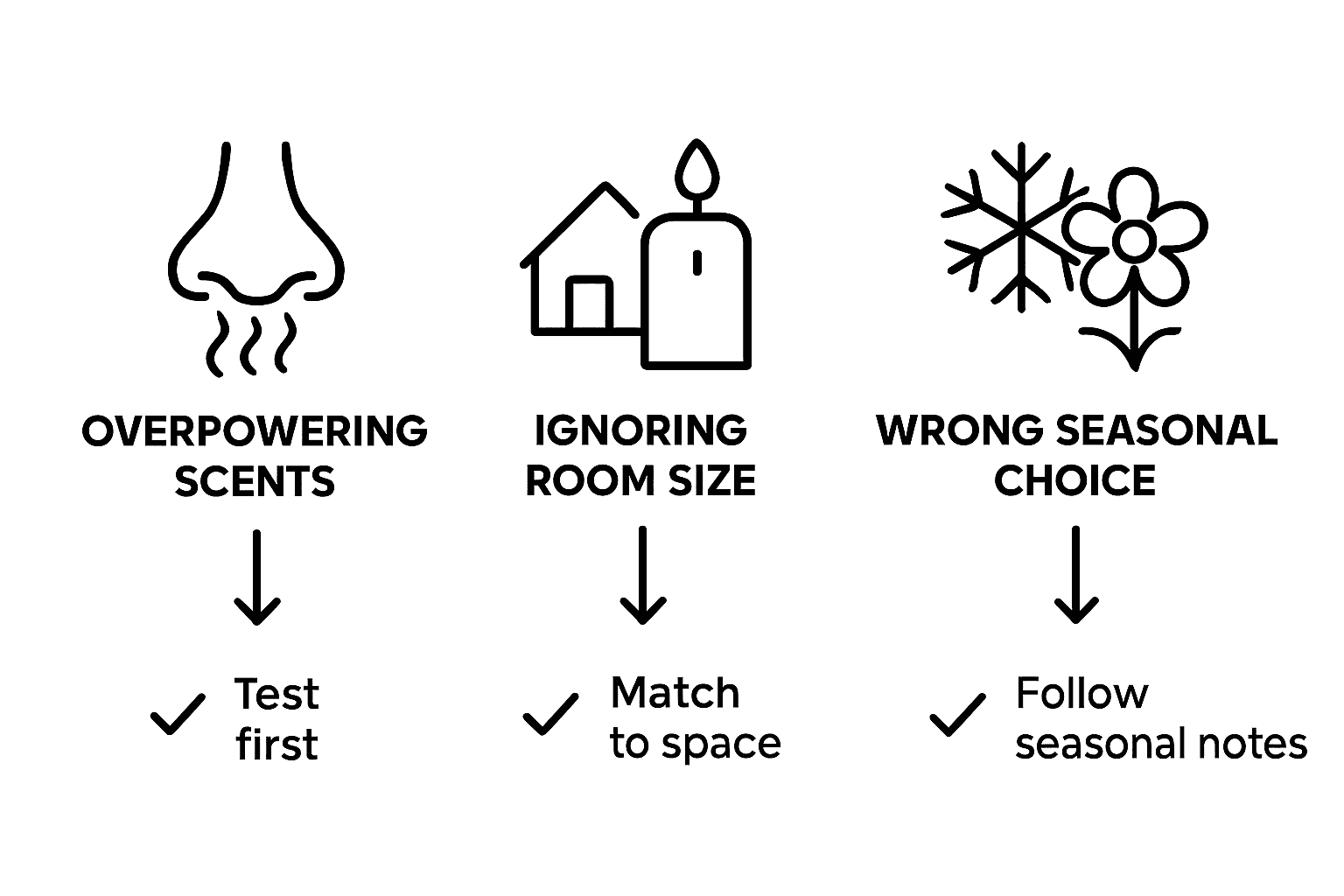
Homeowners frequently misunderstand the nuanced art of seasonal fragrance selection, often falling into predictable traps that compromise their home’s sensory experience. Seasonal scent collections reveal that choosing fragrances is far more complex than simply picking a pleasant smell.
Overlapping Intensity represents one of the most common seasonal scent mistakes. Many individuals select fragrances with identical intensity levels throughout the year, ignoring how molecular composition should shift with seasonal changes. Winter demands rich, robust scents that create warmth, while summer requires lighter, more ephemeral fragrances that feel refreshing and unobtrusive. Using a heavy winter cedar fragrance in a bright summer living room can feel oppressive and disconnected from the natural environment.
Another significant error is neglecting the psychological impact of seasonal fragrances. Each season carries unique emotional resonances that specific scent profiles can either enhance or disrupt. Spring fragrances should evoke renewal and hope, with green and floral notes that feel light and optimistic. Autumn scents must capture introspection and transition, utilizing deeper wood and spice combinations that reflect the season’s contemplative nature. Failing to match fragrance psychology with seasonal emotional landscapes results in sensory dissonance that can feel jarring and uncomfortable.
Pro Seasonal Fragrance Warning: Test fragrances in small quantities first, understanding that a scent’s performance can dramatically change across different rooms, temperatures, and humidity levels.
To further guide your fragrance choices, here are key mistakes and suggested solutions:
| Common Mistake | Why It Matters | Suggested Approach |
|---|---|---|
| Using same intensity all year | Causes sensory imbalance | Adjust strength with each season |
| Ignoring room function | Misaligns mood and space | Match scent to room’s purpose |
| Overlooking scent-psychology link | Results in emotional clash | Choose notes for seasonal mood |
| Not testing in new environments | Leads to scent overwhelm | Always sample before full use |
Elevate Your Home Ambiance with Seasonal Scents Today
Struggling to find the perfect fragrance that matches each season’s unique mood and atmosphere is a common challenge. Your home deserves a sensory experience that evolves naturally with the year’s changes, creating emotional resonance and comfort throughout every room. At Aromel Scents, our carefully curated Fragrances and Candles collections help you build that seasonal fragrance wardrobe with ease. Whether you seek fresh florals for spring or warm spices for winter, our range supports your goal to craft a harmonious and inviting home environment.

Explore our exclusive Bundles for convenient seasonal scent rotation and enjoy free shipping on orders over $50. Visit Aromel Scents now to transform your space with fragrances that speak to every season. Don’t wait to make your home a year-round sanctuary of emotional warmth and sensory delight.
Frequently Asked Questions
What are seasonal fragrances?
Seasonal fragrances are carefully curated scents that evoke the feelings and atmospheres associated with different times of the year. They help enhance emotional wellness and create unique ambiances in your home.
How do I choose the right seasonal fragrance for my home?
Selecting the right seasonal fragrance involves considering room dynamics, architectural elements, and how specific scents can enhance the atmosphere. It’s essential to match the fragrance intensity and character to the season and room purpose.
What are the key characteristics of seasonal fragrances?
Key characteristics of seasonal fragrances include molecular complexity, emotional resonance, and their ability to evoke specific memories. Each season has distinct scent profiles that resonate with psychological states and create emotional connections.
How can I create a fragrance wardrobe for different seasons?
To create a fragrance wardrobe, select at least one signature scent for each season that complements your home’s ambiance. Rotate your fragrances quarterly to reflect the changing seasons and enhance your home’s sensory experience.