
Nearly 40 percent of American luxury fragrance lovers believe scent layering feels too complicated for home use. Yet, transforming your living space is easier than many think. Discover how nuanced combinations of floral, woody, and citrus notes can craft ambience that reflects your mood and style. This guide reveals which fragrance pairing strategies elevate everyday environments, helping you master the art of harmonious scent layering.
Table of Contents
- Defining Scent Layering And Common Misconceptions
- Types Of Scent Layering For Home Environments
- How Scent Layering Works: Techniques And Tools
- Choosing And Pairing Fragrances Effectively
- Pitfalls To Avoid And Safety Considerations
Key Takeaways
| Point | Details |
|---|---|
| Understanding Scent Layering | Scent layering involves strategically combining scents to create complex fragrances that enhance environments. The technique emphasizes compatibility and intention in scent selection. |
| Types of Layering Techniques | Major techniques include additive layering, complementary layering, and sequential release, each offering distinct approaches to olfactory experiences. |
| Fragrance Pairing Considerations | Successful fragrance pairing requires awareness of scent families and their effects on mood, ensuring a balanced and harmonious blend. |
| Safety and Sensitivity | Caution is essential when layering scents; sensitivities can arise, necessitating gradual testing and mindful selection to avoid adverse reactions. |
Defining Scent Layering and Common Misconceptions
Scent layering is an artful approach to creating complex and personalized home fragrances by strategically combining multiple scents. Unlike random mixing, this technique involves carefully selecting complementary aromas that work together to enhance ambient environments. The science of scent perception reveals that our olfactory system processes fragrances as intricate mixtures rather than isolated notes.
Common misconceptions often lead people to believe scent layering is complicated or likely to result in overwhelming combinations. However, professional fragrance designers understand that successful layering requires understanding how different scent notes interact. Top notes provide initial impressions, middle notes create body and complexity, and base notes offer lasting depth. By thoughtfully selecting fragrances with compatible characteristics, you can create nuanced atmospheric experiences that subtly transform living spaces.
To effectively layer scents, consider complementary fragrance families and their potential interactions. Woody base notes might pair wonderfully with citrus top notes, while floral middle notes could bridge these contrasting elements. The goal is not to create a cacophony of competing smells, but to design a harmonious olfactory journey that evolves gently over time. Understanding each fragrance’s unique profile allows you to craft intentional sensory experiences that reflect personal style and mood.
Pro tip: Start your scent layering journey by selecting fragrances from adjacent families and testing small combinations before committing to full room treatments.
Types of Scent Layering for Home Environments
Scent layering in home environments encompasses several sophisticated techniques designed to create multidimensional olfactory experiences. Advanced scent technologies have expanded our understanding of how fragrances can be strategically combined to transform living spaces. The primary types of scent layering include additive layering, complementary layering, and sequential scent release, each offering unique approaches to crafting atmospheric ambiance.
Additive layering involves progressively building fragrance complexity by introducing complementary scent profiles. This method might begin with a light base note like sandalwood, then introduce middle notes of lavender, and finish with bright citrus top notes. Complementary layering takes a different approach, pairing fragrances that enhance each other’s characteristics. For instance, pairing warm vanilla with subtle cedar creates a rich, inviting atmosphere that feels both comforting and sophisticated. Fragrance family compatibility becomes crucial in this approach, ensuring scents harmonize rather than compete.
Some home environments utilize advanced sequential scent release techniques, where fragrances subtly transition over time. This might involve programmable diffusers that change scent profiles throughout the day, creating dynamic sensory experiences. Natural scent sources like essential oil diffusers, scented candles, and botanical arrangements can be strategically combined to achieve nuanced ambient transformations. The key is understanding each fragrance’s unique molecular profile and how different scent notes interact to create cohesive, emotionally resonant environments.
Pro tip: Experiment with scent layering by starting with two complementary fragrances from adjacent scent families, using small quantities to understand their interaction before committing to full room treatments.
Here’s a summary of major scent layering techniques and their distinctive effects:
| Layering Method | Approach | Effect on Environment | Example Pairing |
|---|---|---|---|
| Additive Layering | Gradually build complexity with scents | Rich, multi-note ambiance | Sandalwood + Lavender + Citrus |
| Complementary Layering | Combine fragrances that enhance each other | Deep, harmonious atmosphere | Vanilla + Cedar |
| Sequential Release | Change scent profile over time | Dynamic, evolving air quality | Citrus in morning, Musk at night |
How Scent Layering Works: Techniques and Tools
Scent layering operates on sophisticated principles of olfactory science, utilizing the complex interactions between different fragrance notes and molecular profiles. Digital scent technologies have revolutionized our understanding of how fragrances can be precisely manipulated to create immersive sensory experiences. The fundamental mechanism involves understanding the three primary fragrance notes: top notes that provide initial impressions, heart notes that form the core character, and base notes that create lasting depth and persistence.
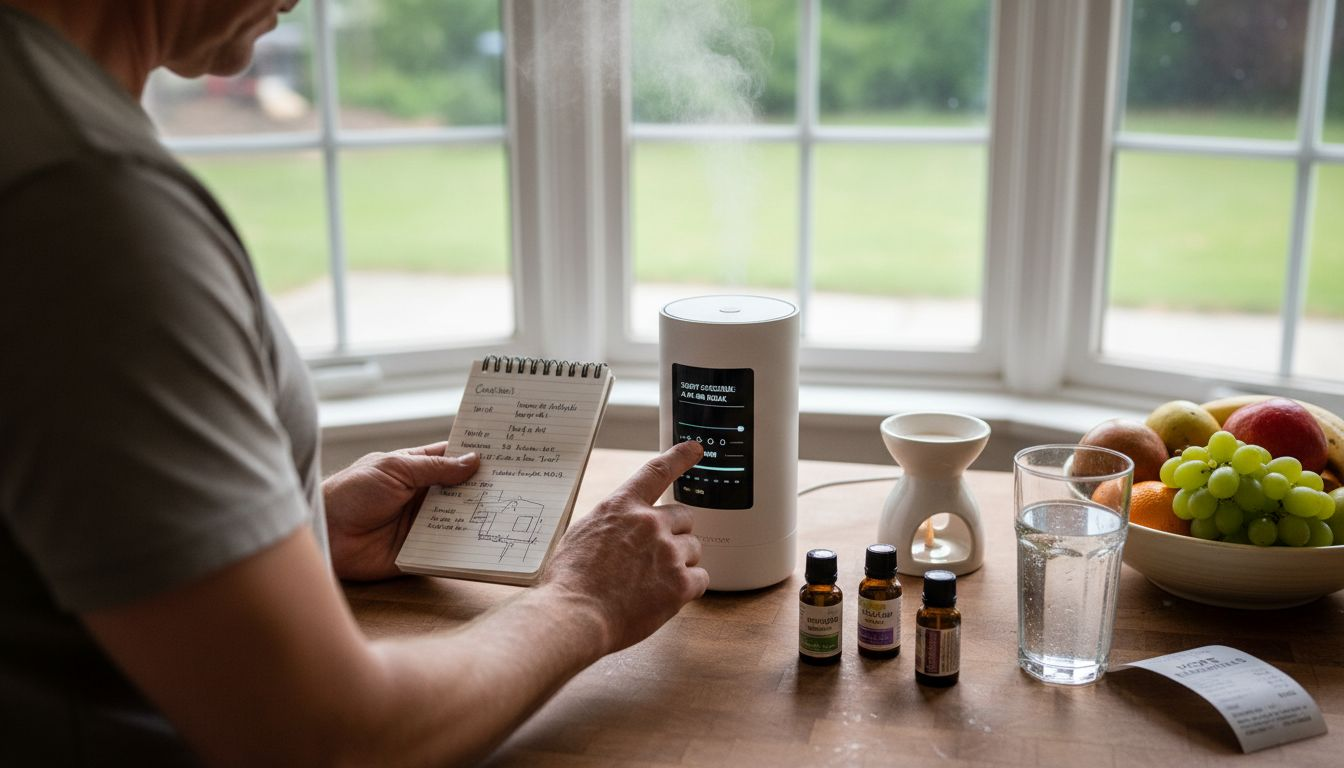
The primary techniques of scent layering involve strategic application and timing of different fragrance components. Professional approaches include sequential layering, where scents are introduced progressively, and simultaneous layering, where complementary fragrances are diffused together. Specialized tools like programmable diffusers, electronic scent emitters, and nebulizers enable precise control over fragrance intensity, duration, and blending. Molecular compatibility becomes crucial, requiring an understanding of how different essential oils and synthetic fragrances interact at a chemical level.
Technical instruments play a significant role in advanced scent layering. Electronic diffusion systems can now program exact release patterns, controlling factors like scent concentration, dispersion rate, and temporal progression. Some sophisticated devices utilize microprocessors to create dynamic scent environments that subtly shift throughout the day, mimicking natural olfactory experiences. The goal is not just fragrance distribution, but creating a nuanced sensory narrative that evolves and responds to environmental and emotional contexts.
Pro tip: Invest in a programmable diffuser with multiple fragrance cartridges to experiment with layered scent profiles and discover unique combinations that resonate with your personal space.
Choosing and Pairing Fragrances Effectively
Understanding neurological responses to scent reveals that fragrance pairing is more than an aesthetic choice it’s a nuanced art of emotional engineering. Successful fragrance selection requires understanding how different scent profiles interact with our psychological and physiological responses. Each fragrance carries unique molecular characteristics that influence mood, memory, and emotional states, making thoughtful combination critical for creating desired ambient experiences.
When selecting complementary fragrances, consider fundamental principles of scent families and their inherent qualities. Woody base notes like sandalwood provide grounding and warmth, while citrus top notes offer brightness and energy. Floral middle notes can bridge these contrasting elements, creating a harmonious olfactory landscape. The key is balance: avoiding overwhelming combinations while ensuring each fragrance has space to express its distinctive character. Scent intensity plays a crucial role, with professional recommendations suggesting using stronger fragrances sparingly and allowing more delicate notes to shine.
Safety and sensitivity are paramount in fragrance selection. Certain essential oils can trigger allergic reactions or sensitivities, so understanding individual tolerances becomes essential. Some individuals might experience headaches or respiratory irritation from intense or incompatible scent combinations. Experts recommend conducting small patch tests and gradually introducing new fragrances, paying close attention to personal and household reactions. Dilution techniques and understanding each fragrance’s chemical properties can help mitigate potential adverse responses while maximizing sensory pleasure.
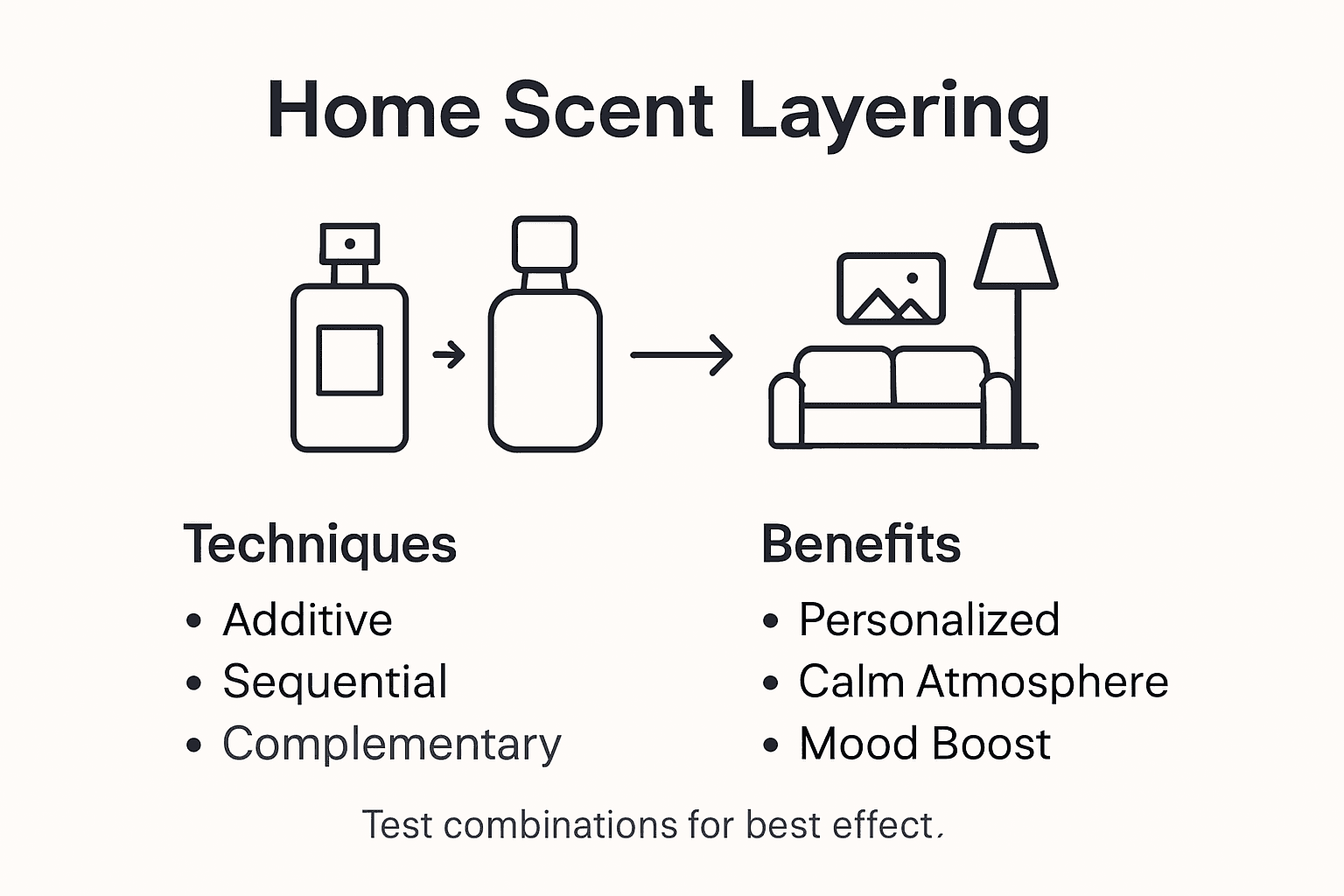
Pro tip: Create a fragrance testing journal to document your scent combinations, noting emotional responses, room atmosphere, and personal comfort levels to develop your unique layering approach.
Pitfalls to Avoid and Safety Considerations
Aromatherapy safety guidelines emphasize the critical importance of understanding potential risks associated with scent layering. Improper fragrance combinations can lead to unintended physiological and psychological responses, transforming what should be a pleasant sensory experience into a potential health hazard. Individuals with respiratory sensitivities, allergies, or underlying health conditions must exercise particular caution when experimenting with complex fragrance profiles.
Multiple research sources highlight several key pitfalls in scent layering. Sensory overload represents a significant risk, occurring when too many competing fragrances overwhelm the olfactory system. This can trigger headaches, respiratory irritation, and unexpected emotional responses. Professional recommendations suggest limiting active scent sources to two or three complementary fragrances, ensuring each has sufficient space to express its unique character without creating olfactory chaos. Specific considerations include understanding individual sensitivity levels, potential allergic reactions, and the chemical interactions between different essential oils and synthetic fragrances.
Ventilation and controlled diffusion emerge as critical safety strategies. Enclosed spaces can concentrate fragrance molecules, potentially intensifying negative reactions. Experts advise implementing systematic testing protocols: start with minimal quantities, observe individual and household responses, and gradually introduce new scent combinations. People with pre-existing respiratory conditions, pregnant women, young children, and pets require extra precautions. Natural sensitivity variances mean what works pleasantly for one person might cause discomfort for another, underscoring the importance of personalized and incremental fragrance exploration.
Pro tip: Create a dedicated fragrance testing zone with excellent ventilation, and always conduct small-scale tests before full room deployment to minimize potential adverse reactions.
Compare key safety and sensitivity concerns when scent layering:
| Concern | Risk Factor | Recommended Prevention | Target Group |
|---|---|---|---|
| Sensory Overload | Multiple strong scents | Limit to 2-3 fragrances | General households |
| Allergic Reactions | Certain essential oils | Conduct patch tests, gradual intro | Allergy-prone individuals |
| Poor Ventilation | Enclosed space concentration | Ensure airflow, test in small area | Small apartments |
Transform Your Home Ambiance with Expert Scent Layering Solutions
Struggling to create the perfect atmosphere using scent layering techniques can feel overwhelming. The article highlights common challenges like finding complementary fragrances and avoiding sensory overload. At Aromel Scents, we understand your goal to craft a harmonious and evolving scent experience that truly reflects your personal style and mood. Our curated collections offer ideal tools such as Diffusers – Aromel and Candles – Aromel designed to help you master additive, complementary, and sequential scent layering with ease.

Explore our carefully selected Bundles – Aromel to start experimenting safely with multiple fragrances and build your unique scent story today. Take advantage of free shipping on orders over $50 and immediate discounts to elevate your home ambiance. Visit Aromel Scents now and bring your personalized scent layering vision to life with confidence.
Frequently Asked Questions
What is scent layering and how does it work?
Scent layering is the technique of combining multiple fragrances to create a complex and personalized atmosphere in your home. By strategically selecting complementary scents based on their top, middle, and base notes, you can enhance ambient experiences without overwhelming your senses.
What are the different types of scent layering techniques?
The main techniques include additive layering, complementary layering, and sequential scent release. Additive layering gradually builds fragrance complexity, complementary layering pairs scents that enhance one another, and sequential release changes scents over time for a dynamic ambiance.
How do I choose and pair fragrances effectively for layering?
When selecting fragrances, consider their scent families and characteristics. Woody base notes can provide depth, while fresh citrus top notes offer brightness. Aim for a balance, ensuring not to overwhelm with too many competing scents and always pay attention to each fragrance’s intensity and compatibility.
What safety considerations should I keep in mind when scent layering?
Be aware of potential allergic reactions or sensitivities to certain fragrances. It’s important to limit the number of active scents, ensure good ventilation, and conduct small patch tests before fully deploying new combinations, especially for individuals with sensitivities, like those with respiratory conditions or allergies.