
Fragrance quietly shapes the rhythm of your day, echoing both personal identity and global traditions. Scented rituals carry psychological comfort and emotional connection, intertwining Middle Eastern oud and Indian sandalwood with individual moments of well-being. Choosing the right home fragrance becomes an act of self-expression, offering a sophisticated way to enhance mood, memory, and the overall atmosphere of your living space. Discover how fragrance becomes a ritual of meaning and emotional resonance across cultures and daily life.
Table of Contents
- Defining Fragrance In Daily Rituals
- Popular Home Fragrance Types And Variations
- How Scents Influence Mood And Behavior
- Integrating Fragrance Into Daily Routines
- Choosing Safe And Effective Home Scents
Key Takeaways
| Point | Details |
|---|---|
| Fragrance as a Cultural Signifier | Fragrance transcends mere scent, serving as a profound expression of cultural heritage and personal identity across various societies. |
| Mood and Behavior Influence | Different scents can significantly impact mood and behavior, with specific aromas like citrus energizing and lavender promoting relaxation. |
| Integration into Daily Life | Incorporating fragrance into daily routines transforms ordinary moments into intentional, emotionally resonant experiences. |
| Safety in Selection | Choosing home fragrances requires careful review of ingredients to avoid potential health risks, prioritizing natural and hypoallergenic options. |
Defining Fragrance in Daily Rituals
Fragrance represents far more than a mere sensory experience. It is a profound cultural and personal phenomenon that transcends simple olfactory perception. Perfume traditions reveal complex human connections across global societies, serving as a nuanced language of emotion, memory, and identity.
Across diverse cultures, fragrance emerges as a powerful ritualistic tool embedded in daily life. Middle Eastern traditions incorporate oud and bakhoor in spiritual ceremonies, while Indian practices interweave essential oils like sandalwood and jasmine into religious and social contexts. These practices demonstrate how scent becomes a vehicle for expressing cultural heritage, personal identity, and emotional resonance.
Daily fragrance rituals function as structured emotional experiences that provide psychological comfort and social connection. Consumer rituals involving fragrance extend beyond personal grooming, encompassing complex interactions between individual habits and broader societal practices. These rituals help individuals create meaningful personal narratives, marking significant life moments and establishing emotional continuity.
Pro Tip: Select fragrances that authentically reflect your personal story and emotional landscape, transforming scent from a mere accessory into a deeply personal ritual of self-expression.
Popular Home Fragrance Types and Variations
Home fragrances represent a sophisticated spectrum of sensory experiences, with multiple delivery formats and performance characteristics designed to enhance living spaces. These products range from traditional scented candles to modern electronic diffusers, each offering unique methods of fragrance distribution and emotional ambiance.
The primary home fragrance types include scented candles, reed diffusers, room sprays, essential oil diffusers, potpourri, and decorative sachets. Candles provide a warm, gradual fragrance release with visual aesthetic appeal, while reed diffusers offer consistent, passive scent distribution. Room sprays deliver immediate but transient aromatic boosts, perfect for quick environment transformation. Electric diffusers represent the most technologically advanced option, allowing precise control over scent intensity and duration.
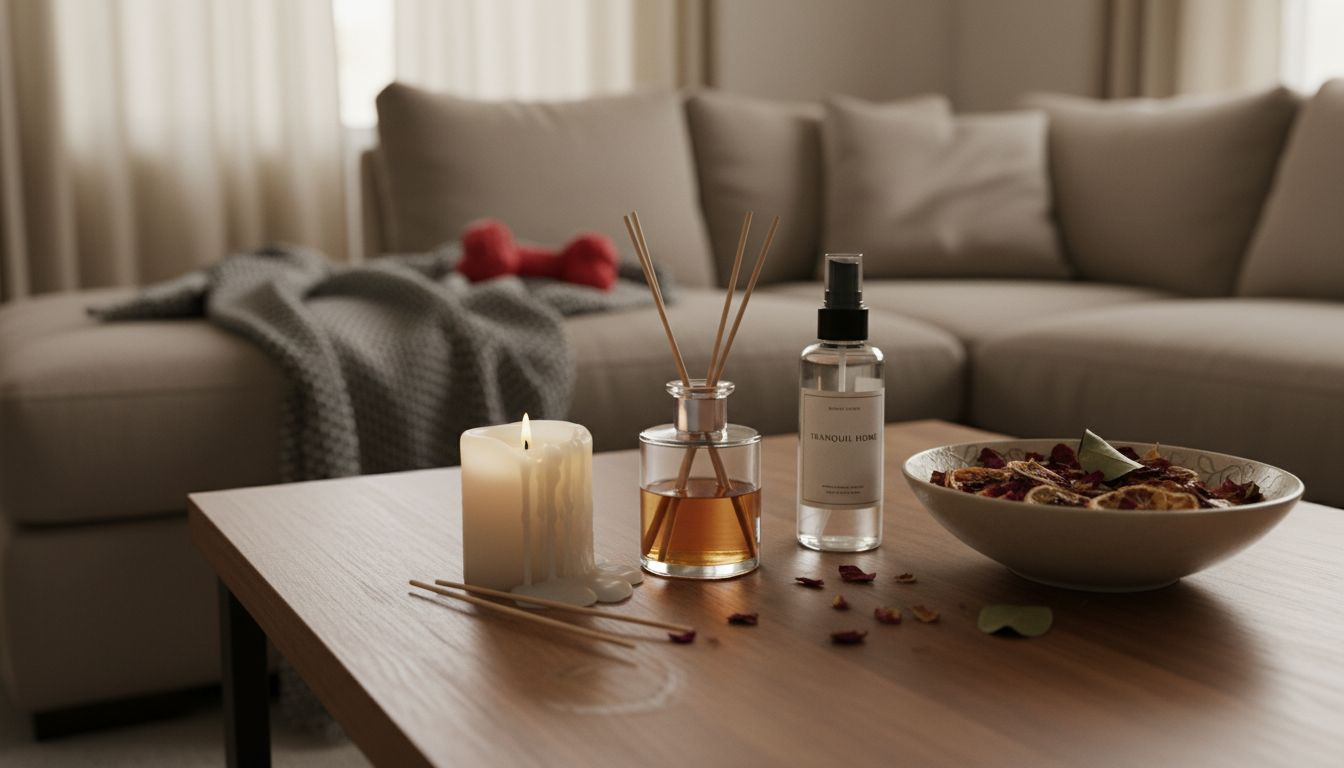
Fragrance formulations are meticulously crafted, blending natural and synthetic ingredients to optimize scent character and longevity. Home fragrance evolution demonstrates complex considerations including heat stability, concentration levels, and carrier substances. These intricate details ensure that each fragrance type delivers a tailored sensory experience matching specific environmental and emotional needs.
Here’s a concise comparison of popular home fragrance types and their ideal environments:
| Fragrance Type | Ideal Environment | Key Benefit |
|---|---|---|
| Scented Candle | Living room or bedroom | Adds ambiance and warmth |
| Reed Diffuser | Bathroom or hallway | Provides continuous scent |
| Room Spray | Entryway or workspace | Instantly refreshes space |
| Electric Diffuser | Office or yoga studio | Customizable intensity |
| Potpourri | Closet or side table | Decorative and subtle scent |
| Sachet | Drawer or wardrobe | Maintains fabric freshness |
Pro Tip: Experiment with layering different fragrance types to create a multidimensional sensory environment that reflects your personal style and mood.
How Scents Influence Mood and Behavior
Olfactory perception goes far beyond simple sensory input, representing a profound neurobiological mechanism for emotional regulation. Odors modulate mood through complex brain pathways, directly interacting with limbic system regions responsible for emotional processing and memory formation.
Scientific research reveals that different fragrances trigger specific psychological and physiological responses. Citrus aromas tend to energize and elevate mood, while lavender promotes relaxation. Vanilla frequently induces feelings of comfort and calmness. Fragrance-induced emotional states influence cognitive functions and social behaviors, demonstrating the intricate relationship between olfactory stimulation and psychological well-being.
The neurobiological impact of scents extends beyond immediate emotional reactions. Pleasant odors can reduce anxiety, decrease stress levels, and create positive psychological states. Conversely, unpleasant aromas may provoke negative emotional responses, highlighting the sophisticated communication between olfactory signals and our internal emotional landscape. These mechanisms operate both at conscious and unconscious levels, suggesting that fragrances are powerful tools for emotional regulation and psychological management.
This summary highlights how specific scents can influence mood and behavior:
| Scent | Psychological Effect | Common Use Case |
|---|---|---|
| Citrus | Boosts energy, uplifts mood | Morning routines |
| Lavender | Reduces stress, calms mind | Evening relaxation |
| Vanilla | Comforts, soothes emotions | Cozy home environments |
| Sandalwood | Grounds, enhances focus | Meditation or study spaces |
| Jasmine | Promotes positivity | Social gatherings |
Pro Tip: Curate a personal fragrance collection that includes scents designed to uplift, calm, and energize, allowing you to intentionally shape your emotional environment.
Integrating Fragrance Into Daily Routines
Daily fragrance rituals represent more than aesthetic choices, transforming ordinary moments into sensory experiences. Long-term scent exposure enhances overall well-being, creating opportunities for intentional mood management and personal environment design.
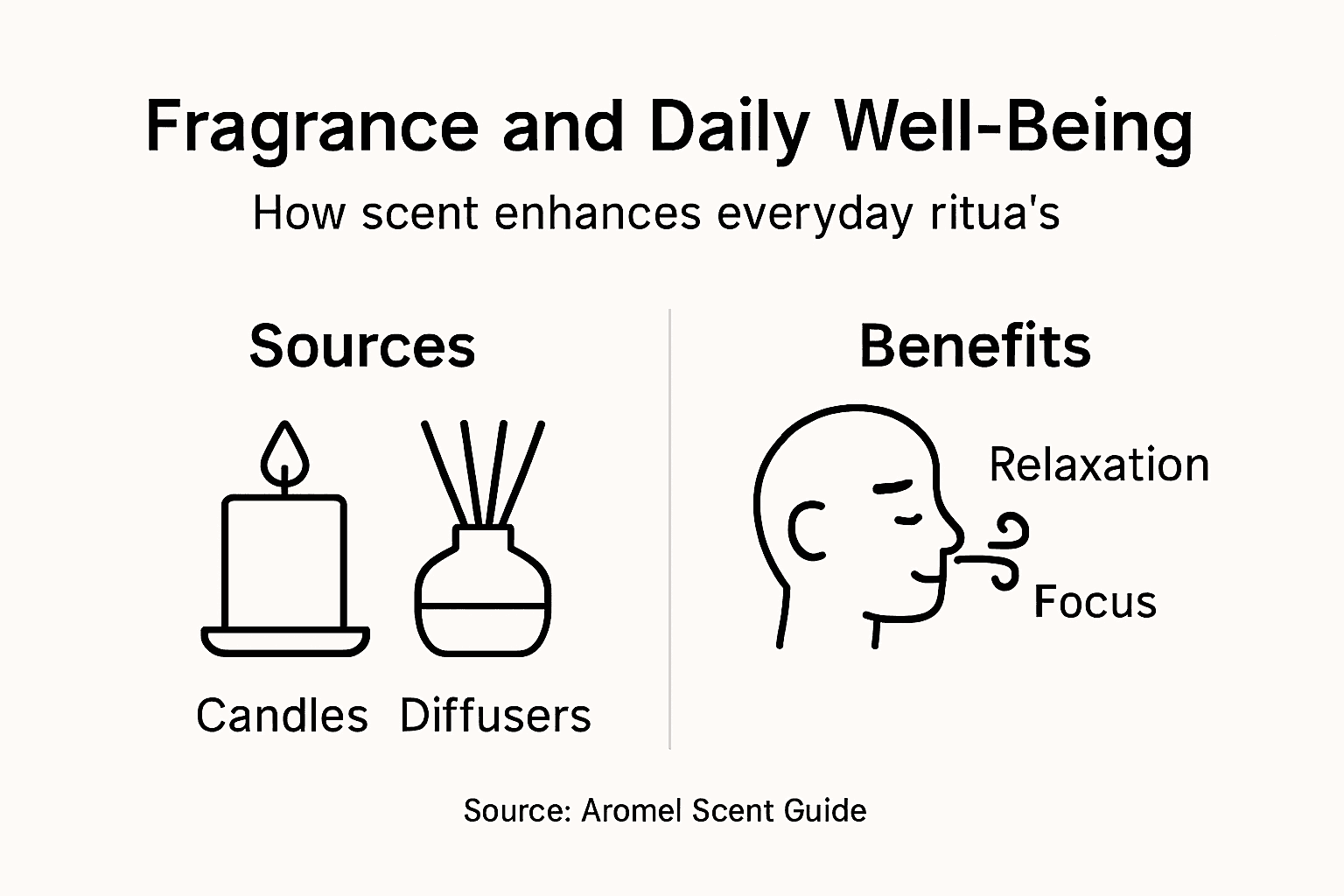
Modern lifestyle integration of fragrances extends beyond traditional personal grooming. Home offices, living spaces, and personal wardrobes now incorporate strategic scent placement to support concentration, emotional balance, and productivity. Diffusers, scented sachets, and targeted room sprays allow individuals to curate sensory experiences that align with specific daily objectives - from energizing morning routines to creating calm evening environments.
Fragrance rituals personalize daily experiences through small, meaningful interactions. These sensory moments can transform mundane activities like working, relaxing, or transitioning between tasks into intentional, emotionally resonant experiences. By selecting fragrances that complement different times of day and personal energy needs, individuals can create a more mindful, responsive daily rhythm.
Pro Tip: Create a personalized fragrance kit with 3-4 different scents dedicated to specific daily intentions: one for morning energy, one for midday focus, one for evening relaxation, and one for weekend rejuvenation.
Choosing Safe and Effective Home Scents
Choosing home fragrances requires a nuanced understanding of fragrance composition and potential health impacts, balancing sensory pleasure with personal wellness. Consumers must navigate complex considerations involving functional benefits, emotional experiences, and potential health sensitivities.
Modern fragrance selection involves careful evaluation of ingredient profiles. Synthetic fragrances and volatile organic compounds can potentially trigger respiratory issues, allergic reactions, and systemic health concerns. Discerning consumers should prioritize products with transparent ingredient lists, focusing on natural essential oils, hypoallergenic formulations, and minimal synthetic chemical additives.
Key considerations for safe home scent selection include understanding individual sensitivities, researching ingredient origins, and recognizing potential interactions with personal health conditions. Individuals with respiratory challenges, allergies, or chemical sensitivities should particularly scrutinize fragrance compositions, opting for products with clear, minimal ingredient profiles and third-party safety certifications.
Pro Tip: Conduct a patch test and small-area trial with new fragrances, monitoring your body’s response before fully integrating a scent into your home environment.
Elevate Your Daily Rituals with Aromel Scents
The article highlights how fragrance shapes emotional well-being and daily experiences by creating meaningful sensory rituals that reduce stress and boost mood. If you are seeking to transform your personal and home environment with scents that reflect your unique lifestyle and bring intentional comfort and energy, Aromel Scents has exactly what you need. Our carefully curated Fragrances – Aromel collection offers a wide range of scents designed to uplift, calm, and energize, helping you build your perfect fragrance ritual.

Discover the ease of integrating high-quality scents into your daily routine through our Diffusers – Aromel or save with thoughtfully paired options in our Bundles – Aromel collection. Act now to create your personalized scent sanctuary and experience the emotional benefits of fragrance in your home and life. Visit Aromel Scents to explore and start your journey toward enhanced well-being today.
Frequently Asked Questions
What is the role of fragrance in daily rituals?
Fragrance plays a significant role in daily rituals by enhancing emotional experiences, promoting personal identity, and providing psychological comfort through intentional scent usage.
How can I integrate fragrance into my daily routine?
You can integrate fragrance into your daily routine by using scented candles, diffusers, or sprays tailored for specific times of day and emotional needs, such as energizing scents in the morning and calming ones in the evening.
What are the different types of home fragrances?
Common types of home fragrances include scented candles, reed diffusers, room sprays, electric diffusers, potpourri, and sachets, each offering unique methods of scent distribution and ambiance enhancement.
How do different scents influence mood and behavior?
Different scents can invoke specific emotional responses; for example, citrus scents are uplifting and energizing, lavender promotes relaxation, and vanilla offers comfort, demonstrating their profound impact on psychological well-being.
Recommended
- Role of Fragrance in Interior Design – Enhancing Home Atmosphere – Aromel
- What Is Home Fragrance and Why It Matters – Aromel
- 7-Step Fragrance Selection Checklist for Home Ambiance Lovers – Aromel
- Fragrance Curation: Enhancing Home Ambiance Intentionally – Aromel
- Why Daily Wellness Rituals Elevate Modern Living – EMILY SANDERS LIFESTYLE