
Over 85 percent of American homeowners say the right scent instantly changes how a room feels. The demand for luxury diffusers and high-end fragrances is rising as more people discover how scent influences mood, comfort, and style at home. Understanding how these devices can transform your living space opens new possibilities for creating soothing retreats or impressive entertaining areas with just the perfect fragrance.
Table of Contents
- Diffusers And Ambiance: Essential Concepts
- Types Of Diffusers And Scent Impact
- How Diffusers Transform Living Spaces
- Benefits And Limitations Of Diffusers
- Risks, Safety, And Common Pitfalls
Key Takeaways
| Point | Details |
|---|---|
| Transformative Role of Diffusers | Diffusers enhance indoor environments by regulating air quality, providing aromatherapy, and influencing the overall ambiance. |
| Consider Room Dynamics | Choose a diffuser type based on room size, desired scent intensity, and aesthetic compatibility for optimal performance. |
| Emotional and Psychological Impact | Different scents trigger specific emotional responses, making diffuser placement crucial in creating desired atmospheres in living spaces. |
| Safety and Maintenance | Select high-quality essential oils and ensure proper ventilation to mitigate potential respiratory irritations and sensitivities effectively. |
Diffusers and Ambiance: Essential Concepts
Diffusers are more than just decorative accessories - they are transformative tools for creating personalized indoor environments. When strategically placed, these devices do far more than simply disperse pleasant aromas; they actively shape the sensory experience of a living space. Modern interior design research suggests that diffusers play a critical role in enhancing both thermal comfort and aesthetic appeal within enclosed spaces.
At their core, diffusers operate by distributing fragrance molecules through air currents, creating a multi-sensory experience that goes beyond simple scent delivery. Unlike traditional air fresheners, modern diffusers offer nuanced fragrance distribution that can subtly alter room dynamics. Acoustic studies on room environments have even demonstrated that strategic diffuser placement can impact sound perception, contributing to an overall sense of comfort and ambiance.
The functionality of diffusers extends across multiple dimensions of home atmosphere. They can:
- Regulate indoor air quality
- Provide therapeutic aromatherapy benefits
- Create mood-specific environments
- Serve as stylish decor elements
- Mask unwanted odors naturally
While choosing a diffuser, homeowners should consider factors like room size, desired fragrance intensity, and aesthetic compatibility with existing interior design. Electric ultrasonic diffusers offer precision control, while reed diffusers provide a more passive, consistent fragrance distribution.
Pro tip: Select a diffuser that complements your room’s color palette and design aesthetic for seamless integration into your living space.
Types of Diffusers and Scent Impact
Home fragrance enthusiasts have multiple diffuser options, each delivering unique scent experiences and environmental interactions. Indoor volatile organic compound research reveals that different diffuser types significantly impact indoor air quality, making selection more complex than simply choosing an appealing fragrance.
Four primary diffuser categories dominate the home fragrance market: ultrasonic, nebulizing, heat, and evaporative diffusers. Ultrasonic diffusers use water and electronic vibrations to disperse fine fragrance particles, creating a cool mist effect. Nebulizing diffusers, in contrast, break down essential oils into microscopic particles without water, providing more concentrated scent distribution. Heat diffusers utilize warming elements to release fragrance, while evaporative diffusers leverage airflow to spread scent through disposable pads or reeds.
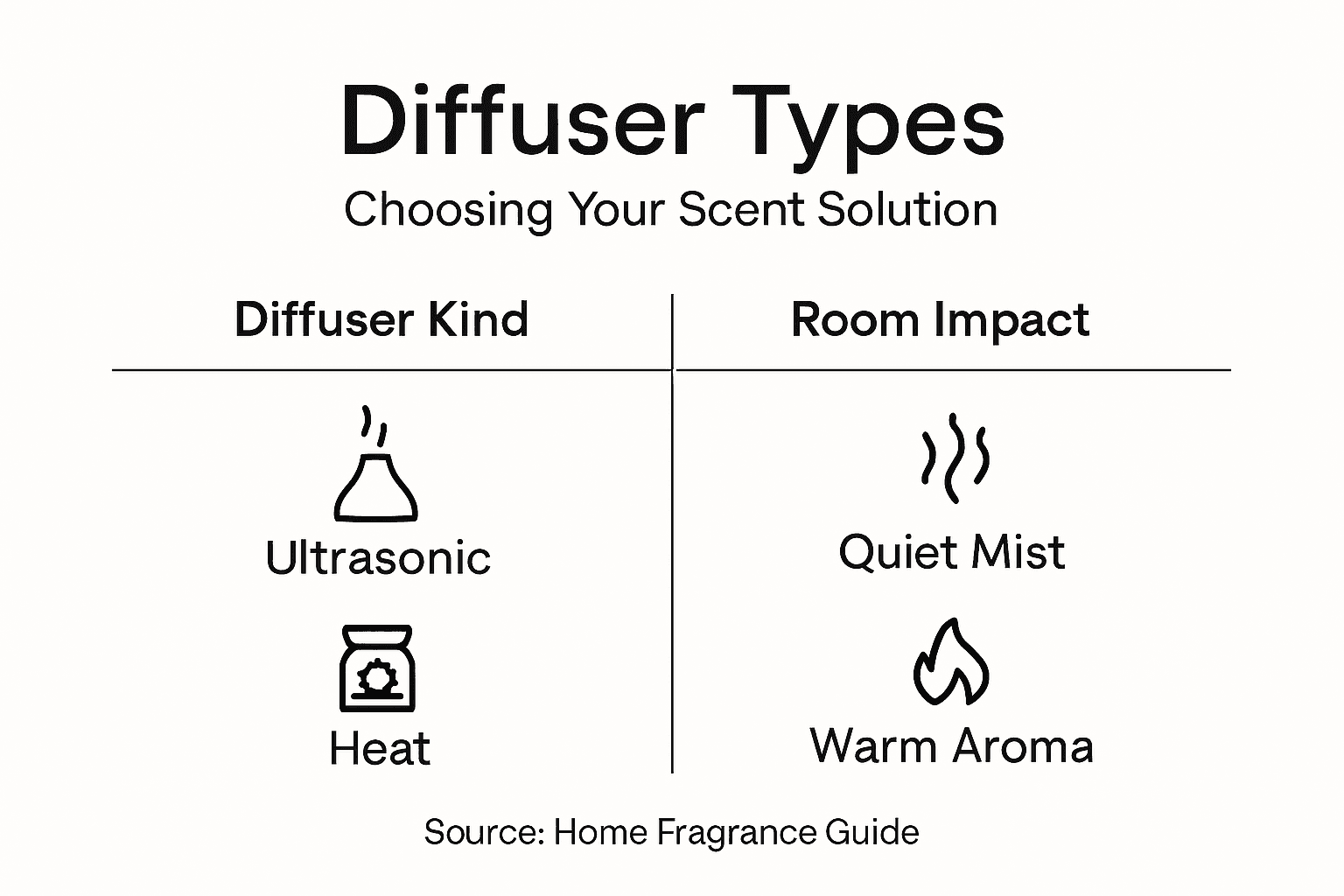
To better understand the differences between popular diffuser types, review this side-by-side comparison:
| Diffuser Type | Fragrance Distribution | Maintenance Needs | Suitable Room Size |
|---|---|---|---|
| Ultrasonic | Fine mist, adjustable intensity | Regular water cleaning | Small to medium rooms |
| Nebulizing | Pure, concentrated aroma | Occasional nozzle cleaning | Medium to large rooms |
| Heat | Gentle, gradual scent release | Replace warming elements | Small enclosed spaces |
| Evaporative | Subtle, steady fragrance | Pad or reed replacement | Small to medium rooms |
The science behind scent diffusion is fascinating. Essential oil diffusion studies demonstrate that different diffuser technologies can dramatically alter fragrance molecular structure and dispersion. This means the type of diffuser you choose directly impacts not just scent intensity, but also how therapeutic or atmospheric the fragrance becomes.
When selecting a diffuser, consider these critical factors:
- Room size and layout
- Desired scent intensity
- Noise level preferences
- Maintenance requirements
- Power source availability
- Aesthetic design compatibility
Pro tip: Match your diffuser type to your specific room requirements for optimal fragrance performance and ambiance.
How Diffusers Transform Living Spaces
Home environments are more than physical spaces - they are sensory experiences that profoundly impact our emotional well-being. Interior design research demonstrates that strategic scent placement can fundamentally alter room dynamics, transforming ordinary spaces into personalized sanctuaries of comfort and mood.
Diffusers act as silent architects of atmosphere, manipulating sensory perception through carefully dispersed fragrances. They do more than simply release pleasant aromas - they create psychological landscapes that can energize, calm, or inspire. Different scent profiles trigger specific emotional responses: lavender promotes relaxation, citrus increases energy, and woody notes can create a sense of grounding and sophistication.
Beyond emotional impact, fabric diffusion studies reveal that modern diffusers contribute to overall indoor air quality and thermal comfort. By gently circulating fragranced air, these devices help maintain a consistent environmental experience, subtly improving how we perceive and interact with our living spaces.
Consider the transformative potential of diffusers across different home zones:
Here is a summary of how diffuser placement in specific home zones can optimize mood and function:
| Room Zone | Ideal Scent Profile | Desired Effect | Diffuser Recommendation |
|---|---|---|---|
| Bedroom | Lavender or chamomile | Relaxation, improved sleep | Ultrasonic or heat diffuser |
| Home Office | Citrus or peppermint | Focus, mental clarity | Nebulizing diffuser |
| Living Room | Warm woods, vanilla | Comfort, social atmosphere | Ultrasonic or evaporative |
| Bathroom | Eucalyptus or mint | Freshness, spa experience | Reed or evaporative |
| Kitchen | Herbal, lemon | Odor neutralization, appetite | Ultrasonic or heat diffuser |
- Bedroom: Promote relaxation and better sleep
- Home Office: Enhance focus and productivity
- Living Room: Create welcoming, inviting atmospheres
- Bathroom: Generate spa-like, refreshing environments
- Kitchen: Neutralize cooking odors and create appetizing ambiances
Pro tip: Rotate your diffuser scents seasonally to keep your living space feeling fresh and dynamically aligned with changing moods and environments.
Benefits and Limitations of Diffusers
Fragrance diffusers represent a sophisticated approach to creating personalized living environments, offering remarkable benefits alongside nuanced considerations. Fabric diffuser research highlights their potential to improve indoor air quality and create energy-efficient spaces through strategic scent and air circulation management.
The primary advantages of diffusers include their ability to transform atmospheric conditions without invasive modifications. Unlike candles or traditional air fresheners, diffusers provide consistent fragrance distribution, precise intensity control, and minimal fire risk. They can effectively neutralize unwanted odors, create mood-specific environments, and even support emotional well-being through carefully selected essential oil blends.
Volatile organic compound studies reveal important limitations homeowners should consider. While diffusers enhance ambiance, they can potentially introduce complex chemical compounds into indoor environments. Responsible usage involves selecting high-quality essential oils, maintaining proper ventilation, and being mindful of potential sensitivities.
Key benefits and considerations include: Benefits:
- Customizable scent experiences
- Low maintenance
- Aesthetic home decor elements
- Potential aromatherapeutic effects
- Safe alternative to open flames
Limitations:
- Potential VOC emissions
- Initial equipment cost
- Requires periodic oil replacement
- Potential allergen exposure
- Sensitivity to specific fragrances
Pro tip: Rotate your diffuser locations and experiment with different essential oil combinations to maximize benefits while minimizing potential indoor air quality concerns.
Risks, Safety, and Common Pitfalls
Volatile organic compound research reveals critical safety considerations that every homeowner should understand before incorporating diffusers into their living spaces. While these devices offer remarkable ambiance enhancement, they are not without potential risks that demand careful navigation and informed usage.
The primary safety concerns revolve around indoor air quality and potential respiratory sensitivities. Essential oil diffusers can introduce complex chemical compounds into enclosed environments, which may trigger allergic reactions or exacerbate existing respiratory conditions. Individuals with asthma, chronic lung diseases, or heightened chemical sensitivities must exercise additional caution when selecting and using diffuser technologies.
Indoor air quality studies highlight several critical safety parameters homeowners should prioritize. Proper ventilation emerges as a fundamental strategy for mitigating potential risks, ensuring that fragrance molecules do not become concentrated to problematic levels. Understanding your specific room dynamics, ventilation capacity, and individual health sensitivities becomes paramount in responsible diffuser usage.
Common risks and safety considerations include:
- Potential respiratory irritation
- Allergic reactions to specific essential oils
- Risk of chemical sensitivity
- Potential interactions with existing medical conditions
- Overexposure to concentrated fragrance molecules
Key safety strategies:
- Choose high-quality, pure essential oils
- Use diffusers in well-ventilated spaces
- Limit continuous diffusion time
- Monitor individual and family health responses
- Consult healthcare professionals with specific concerns
Pro tip: Start with minimal diffusion times and low concentrations, gradually adjusting to understand your personal and family’s unique sensitivities.
Elevate Your Space with the Perfect Diffuser
Transforming your living environment into a personalized sanctuary requires more than just pleasant scents. This article highlights how diffusers shape ambiance, support emotional well-being, and improve indoor air quality. If you are looking to create mood-specific environments or simply mask unwanted odors naturally, understanding diffuser types and their placement is key. Whether you want calming lavender for the bedroom or energizing citrus for your office, choosing the right diffuser makes all the difference.
Discover a curated selection of high-quality diffusers designed to meet diverse room needs and preferences at Diffusers – Aromel.

Enhance your home atmosphere today with scents that soothe, inspire, and refresh. Visit Aromel Scents to explore our exclusive range, including elegant Reed Diffusers – Aromel and convenient Bundles – Aromel that offer great value. Take advantage of our special discounts and free shipping on orders over $50 to elevate your space now. Start crafting your personalized ambiance with Aromel Scents today.
Frequently Asked Questions
What are diffusers and how do they work?
Diffusers are devices that disperse fragrance molecules through air currents, creating a multi-sensory experience that enhances the ambiance of a living space. They operate by distributing scents more effectively than traditional air fresheners, contributing to a comfortable and aesthetically pleasing environment.
What are the different types of diffusers and how do they compare?
The four primary types of diffusers are ultrasonic, nebulizing, heat, and evaporative diffusers. Ultrasonic diffusers create a cool mist, nebulizing diffusers produce concentrated scents without water, heat diffusers use warmth for scent release, and evaporative diffusers rely on airflow. Each has unique benefits and maintenance needs, impacting the fragrance experience.
How can I effectively use a diffuser to enhance my indoor environment?
To maximize the benefits of diffusers, consider factors such as the room size, desired scent intensity, and aesthetic compatibility. Place diffusers in well-ventilated areas, select scents based on the mood you want to create, and rotate scents seasonally for a fresh ambiance.
Are there any safety concerns related to using diffusers?
Yes, there are safety considerations when using diffusers, such as potential respiratory irritation or allergic reactions, especially for individuals with asthma or sensitivities. It’s crucial to use high-quality essential oils, ensure proper ventilation, and monitor individual health responses when using diffusers.
Recommended
- What Is a Decorative Diffuser and Why It Elevates Homes – Aromel
- 7 Creative Ways to Use Diffusers for a Cozy Home Ambience – Aromel
- How to Decorate with Diffusers for a Stunning Home Ambiance – Aromel
- Scent Diffusion Explained: Transforming Home Ambiance – Aromel
- Calming Moisture Mist ৹ Healing, Cooling & Inflammation Relief – Claribelskincare.com
- Aromatherapy Diffuser Wax Electric Melt Warmer Safety Yankee Candle La – Cosmetics Niche