
Most luxury fragrance lovers do not realize that over 60 percent of American households now use multiple scent products in their daily routines. Fragrance layering has become a global fascination for those eager to craft complex, inviting atmospheres at home. For aromatherapy enthusiasts and home fragrance fans, mastering this art promises deeper, longer-lasting aromas that reflect personal style and set the mood for any space.
Table of Contents
- What Is Fragrance Layering And How It Works
- Common Types Of Fragrance Layering Products
- Techniques For Blending Scents Successfully
- Practical Tips For Long-Lasting Layered Aromas
- Mistakes To Avoid In Fragrance Layering
Key Takeaways
| Point | Details |
|---|---|
| Fragrance Layering Enhances Scent Profiles | Combining multiple fragrance products creates a unique and evolving scent experience in your home. |
| Choosing Compatible Notes is Key | Understanding the interaction of scent molecules helps achieve harmonious blends that enhance aroma complexity. |
| Application Techniques Matter | Start with heavier base notes and layer lighter scents to create depth and maintain longevity throughout the day. |
| Avoiding Mismatched Combinations | Mixing incompatible scents can lead to unpleasant aromas, so testing on blotters is essential before full application. |
What Is Fragrance Layering and How It Works
Fragrance layering is a sophisticated technique for creating personalized, multi-dimensional home scent experiences by strategically combining different fragrance products. Fragrance composition research reveals that this method involves blending multiple scented items to produce a unique, harmonious aroma profile that transforms living spaces.
At its core, fragrance layering works by understanding how different volatile compounds interact. Just as a master perfumer carefully balances top, middle, and base notes in a single fragrance, home fragrance enthusiasts can achieve similar complexity by combining complementary scented products. This might mean pairing a woody reed diffuser with a citrus room spray or layering a vanilla candle with a lavender room mist to create a nuanced sensory environment.
The science behind fragrance layering is rooted in understanding scent molecules and how they interact. FDA fragrance guidelines highlight that fragrances are complex mixtures with unique volatility profiles. By selecting scents that share complementary notes or have strategic molecular interactions, you can create a more sophisticated and lasting aromatic experience that evolves subtly throughout your living space.
Pro tip: Start with lighter, fresher scents as your base layer and gradually add deeper, more complex fragrances to build depth and intrigue in your home’s aromatic landscape.
Common Types of Fragrance Layering Products
Fragrance layering involves a diverse range of products that can be strategically combined to create sophisticated sensory experiences. Consumer fragrance products span multiple categories, including personal care items, home fragrances, and ambient scent solutions that can be artfully mixed to enhance living spaces.
The primary categories of fragrance layering products include personal care items like perfumes, body lotions, and shower gels, as well as home fragrance solutions such as candles, reed diffusers, room sprays, and essential oil blends. Each product type offers unique characteristics that contribute to the overall aromatic composition. For instance, a body lotion with a light vanilla base can serve as an excellent foundation for layering with a more intense woody room spray, creating a complex and personalized scent profile.
FDA fragrance guidelines highlight the complexity of fragrance ingredients across different product types. Home fragrance enthusiasts can experiment with combinations like pairing a citrus-based room spray with a lavender diffuser, or mixing a musky cologne with a fresh body cream to create multidimensional scent experiences that evolve throughout the day and transform living environments.
Pro tip: Start your fragrance layering journey by selecting products with complementary base notes and gradually experiment with more complex combinations to discover your unique scent signature.
Here is a comparison of popular fragrance layering products and their main benefits for home scenting:
| Product Type | Primary Role | Layering Benefit | Lasting Power |
|---|---|---|---|
| Perfume | Personal aroma base | Depth, customization | High |
| Room Spray | Ambient scent boost | Quick refresh, energy | Moderate |
| Reed Diffuser | Continuous fragrance | Subtle foundation | High |
| Scented Candle | Atmosphere enhancer | Warmth, complexity | Moderate |
| Body Lotion | Skin scent primer | Scent retention, harmony | Moderate |
Techniques for Blending Scents Successfully
Olfactory science insights reveal that successful fragrance layering is an intricate art of understanding how individual scent molecules interact and complement each other. The key to creating harmonious fragrance combinations lies in recognizing the complex chemical interactions that occur when different scents are blended.
Mastering fragrance layering requires a strategic approach to selecting and combining scent notes. Start by understanding the volatility of different fragrances, which determines how quickly they evaporate and interact. Light, fresh top notes like citrus or green herbs should be applied first, followed by more robust middle notes such as floral or spicy scents, and finally anchored by deep base notes like woody or musky fragrances that provide long-lasting depth and complexity.
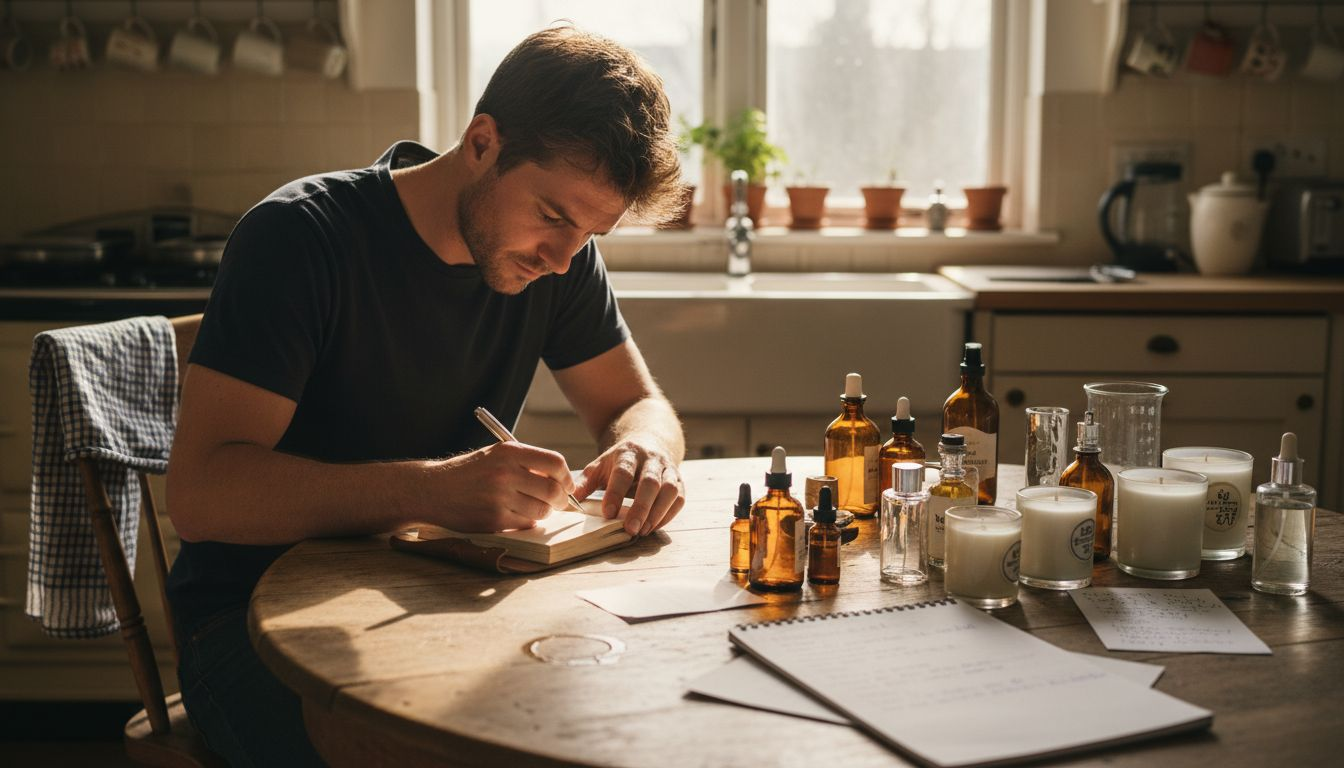
Blending techniques emphasize the importance of testing and experimentation. Professional fragrance designers recommend using blotter strips or skin testing to evaluate how different scents interact and evolve over time. Pay attention to how the fragrances change from initial application to their final dry-down, creating a multi-dimensional sensory experience that transforms throughout the day.
Pro tip: Create a fragrance journal to document your layering experiments, noting which combinations work best and how different scents interact to help you develop your unique aromatic signature.
This table summarizes key scent layering techniques and their impact on the aromatic result:
| Technique | Approach | Strengths | Considerations |
|---|---|---|---|
| Top-to-Base Layering | Light to deep scents | Balanced evolution | Requires scent knowledge |
| Family-Based Mixing | Similar fragrance notes | Cohesive, long-lasting | Limited variety |
| Experimental Testing | Blotter, skin trials | Unique combinations | Risk of clashing aromas |
Practical Tips for Long-Lasting Layered Aromas
Fragrance chemistry principles demonstrate that creating long-lasting layered aromas requires a nuanced understanding of scent molecular interactions. The key to sustained fragrance lies in strategically selecting and combining scent notes that complement and enhance each other’s longevity and complexity.
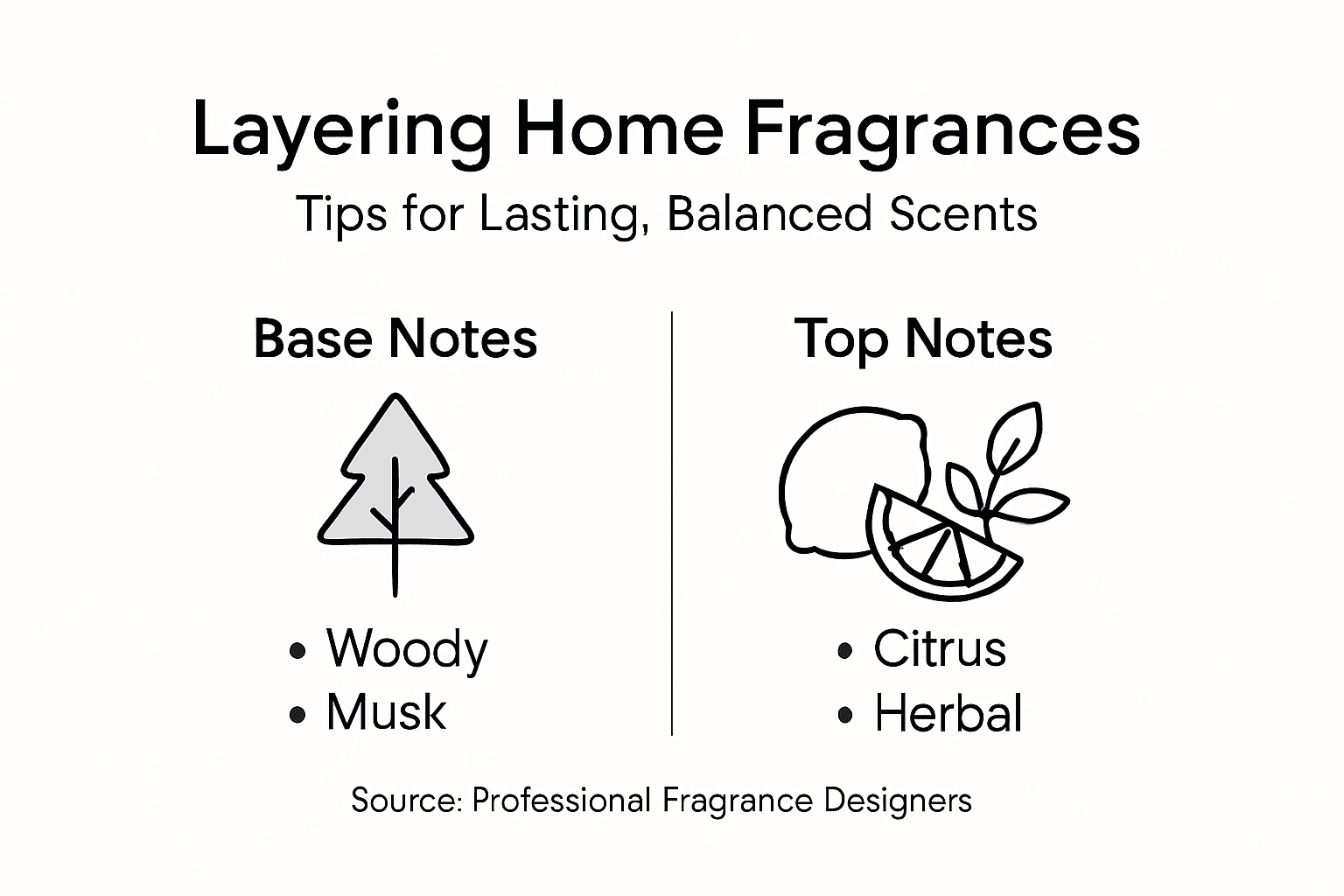
Successful long-lasting aromatic experiences depend on precise application techniques. Begin by preparing your skin with an unscented moisturizer, which creates an optimal base for fragrance absorption. Apply heavier, slower-evaporating base notes first - think woody or musky scents - followed by lighter, more volatile top notes like citrus or herbal fragrances. This method ensures a gradual scent release that evolves beautifully throughout the day, maintaining depth and intrigue.
Scent preservation guidelines recommend protecting your fragrances from environmental factors that can degrade their quality. Store scented products away from direct sunlight, heat, and humidity. Consider using complementary products from the same fragrance family to create a more cohesive and long-lasting aromatic profile, as these are specifically designed to interact harmoniously and extend the overall scent experience.
Pro tip: Apply fragrance to pulse points like wrists, neck, and behind ears, where body heat naturally helps diffuse and amplify the scent throughout the day.
Mistakes to Avoid in Fragrance Layering
Fragrance ingredient safety reveals critical mistakes that can transform a potentially delightful aromatic experience into an overwhelming sensory assault. Understanding these pitfalls is essential for creating harmonious and enjoyable fragrance layers that enhance rather than disrupt your living environment.
One of the most common errors is indiscriminately mixing incompatible scent profiles without considering their molecular interactions. Avoid combining fragrances with conflicting notes that can create muddled, unpleasant aromas. For instance, pairing a heavy, musky scent with a light, citrusy fragrance without careful consideration can result in a jarring and unbalanced olfactory experience. Always test combinations on blotter strips or conduct small-scale experiments to understand how different fragrances interact.
Health considerations for fragrance use highlight the importance of being sensitive to potential allergic reactions and respiratory triggers. Be mindful of the concentration and intensity of fragrances, especially in shared or enclosed spaces. Some individuals may have heightened sensitivities to certain scent compounds, so it is crucial to choose hypoallergenic products and apply fragrances sparingly.
Pro tip: Create a personal fragrance testing zone with blotter strips and neutral background scents to experiment with layering combinations before committing to a full application.
Elevate Your Home Ambiance with Expert Fragrance Layering
Struggling to create a harmonious and long-lasting scent atmosphere in your home? Fragrance layering is the secret to transforming your space with depth and personalized complexity. By combining complementary notes from different products like diffusers, candles, and perfumes, you can craft a unique aroma that evolves beautifully. At Aromel Scents, we simplify your layering journey by offering a carefully curated Fragrances collection alongside elegant Diffusers and thoughtfully designed Bundles that blend seamlessly.

Discover your perfect scent combinations today at Aromel Scents. Take advantage of exclusive discounts and free shipping on orders over $50 to start building a captivating home ambiance that reflects your style. Don’t wait—embrace fragrance layering now and transform your living space with aromatic sophistication.
Frequently Asked Questions
What is fragrance layering?
Fragrance layering is the technique of combining different scented products to create a personalized and complex aroma profile in your home. This method enhances the olfactory experience by blending complementary scents.
How do I start fragrance layering at home?
Begin by selecting lighter, fresher scents as your base layer, such as citrus or green herbs. Gradually add deeper, more complex fragrances like woody or musky scents to build depth and create a truly unique aroma.
What types of products can I use for fragrance layering?
You can use a variety of products, including perfumes, body lotions, room sprays, scented candles, and reed diffusers. Each product type offers unique characteristics that contribute to your overall aromatic composition.
What mistakes should I avoid when layering fragrances?
Common mistakes include mixing incompatible scent profiles, leading to overwhelming aromas. It’s important to test combinations on blotter strips and avoid applying fragrances too heavily, especially in shared spaces.