
Most American homes now view personalized scent as an essential part of interior design. Fragrance curation goes far beyond simply picking a single pleasant aroma. Experts say that a carefully curated scent collection can shift mood, spark memories, and subtly express identity. For homeowners and luxury fragrance lovers everywhere, understanding how to purposefully select and layer home fragrances unlocks new ways to enhance ambiance and emotional wellbeing.
Table of Contents
- What Is Fragrance Curation And Why It Matters
- Types Of Fragrance Collections For Homes
- How Scent Layering And Selection Work
- Curating For Mood, Season, And Space
- Common Pitfalls In Home Fragrance Curation
Key Takeaways
| Point | Details |
|---|---|
| Fragrance Curation Enhances Spaces | Thoughtfully selected scents can transform living environments and evoke specific emotions. |
| Importance of Scent Families | Understanding scent families allows for intentional design of moods and seasonal rotations in fragrances. |
| Scent Layering for Personalization | Layering fragrances enhances their complexity and should harmonize for a cohesive aromatic experience. |
| Avoid Common Mistakes | Proper placement and storage of fragrances are crucial to maintain their quality and effectiveness. |
What Is Fragrance Curation and Why It Matters
Fragrance curation represents a sophisticated approach to designing sensory experiences within home environments by intentionally selecting and arranging scents that communicate specific emotions, memories, and atmospheres. It transcends simply choosing pleasant aromas, instead focusing on creating purposeful olfactory landscapes that transform living spaces.
At its core, fragrance curation involves understanding how different scent profiles interact with human psychology and environmental design. Professionals in scent design combine creative and scientific expertise to craft experiences that resonate deeply with individual preferences and cultural contexts. This nuanced process requires analyzing raw materials, understanding consumer insights, and recognizing how specific fragrances trigger emotional responses.
The strategic selection of home fragrances goes beyond aesthetic pleasure. Each carefully chosen scent can communicate subtle narratives about personal identity, create specific mood environments, and enhance psychological well-being. Whether you’re designing a calming meditation space, an energizing home office, or a welcoming living area, fragrance curation allows precise emotional and sensory engineering of your personal environment.
Pro tip: Start your fragrance curation journey by mapping out the emotional atmosphere you want to create in each room before selecting specific scent collections.
Types of Fragrance Collections for Homes
Home fragrance collections represent a strategic approach to creating sensory environments, encompassing diverse scent profiles and delivery methods that transform living spaces. Understanding different fragrance families and their unique characteristics is crucial for intentional home ambiance design, enabling homeowners to craft precise emotional landscapes through carefully selected scents.
Traditional home fragrance collections typically include multiple formats such as scented candles, reed diffusers, room sprays, and essential oil collections. Each format offers distinct advantages: candles provide warm, ambient lighting with fragrance, diffusers offer continuous scent distribution, sprays enable quick environment transformation, and essential oil collections allow for personalized blending and therapeutic applications.
Here’s a summary comparing common home fragrance delivery methods and their unique benefits:
| Format | Scent Distribution | Lighting Effect | Customization Potential |
|---|---|---|---|
| Scented Candle | Gradual, room-filling | Creates warm ambiance | Moderate, blendable by type |
| Reed Diffuser | Continuous, subtle | None | Low, scent fixed by formula |
| Room Spray | Immediate, adjustable | None | High, quick scent changes |
| Essential Oils | Variable, therapeutic | None | Very high, blend and diffuse |
Fragrance collections are often categorized by scent families that correspond to specific moods and seasonal preferences. These families include fresh and citrusy notes perfect for summer spaces, warm woody and spicy fragrances ideal for winter environments, floral collections that bring spring vitality, and complex gourmand scents that create intimate, inviting atmospheres. The strategic rotation of these collections allows homeowners to dynamically adapt their living spaces’ sensory experiences throughout the year.

Here’s a table showing how scent families align with moods and seasonal uses:
| Scent Family | Typical Mood Created | Best Seasonal Use | Suggested Room Type |
|---|---|---|---|
| Citrus/Fresh | Energizing, uplifting | Summer, spring | Living room, home office |
| Woody/Spicy | Cozy, comforting | Winter, autumn | Bedroom, lounge |
| Floral | Bright, soothing | Spring, summer | Bathroom, bedroom |
| Gourmand | Inviting, intimate | Autumn, winter | Kitchen, dining area |
Pro tip: Create a fragrance wardrobe by selecting complementary scents across different formats that can be mixed and matched to suit changing emotional needs and seasonal transitions.
How Scent Layering and Selection Work
Scent layering is a sophisticated technique that transforms fragrance application from a simple routine into an artful, personalized experience. Fragrance experts recommend applying scents in an intentional sequence to increase longevity and create dynamic sensory experiences, allowing individuals to craft unique aromatic narratives that evolve throughout the day.
The process of scent layering involves strategically combining multiple fragrance elements to create a complex, multidimensional olfactory profile. This might include starting with a scented body lotion as a base, followed by a complementary perfume or room spray, and potentially finishing with a coordinating essential oil. The key is selecting fragrances that harmonize rather than conflict, creating a seamless transition between different scent notes that tells a cohesive aromatic story.
Successful scent layering requires understanding fragrance families and how different notes interact. Warm base notes like vanilla or sandalwood can provide depth to lighter citrus or floral top notes, while spicy mid-notes can bridge seemingly disparate scent profiles. Professional fragrance curators often recommend starting with a neutral base and gradually introducing more complex layers, allowing each scent to develop and interact naturally without overwhelming the senses.
Pro tip: Begin your scent layering journey by selecting fragrances from complementary scent families and always test combinations on your skin to understand how they evolve over time.
Curating for Mood, Season, and Space
Fragrance curation is an intentional art form that transforms living spaces by strategically selecting scents that respond to emotional, seasonal, and environmental dynamics. Similar to curating art collections, fragrance selection requires a nuanced approach that considers the theoretical and practical dimensions of creating sensory experiences, allowing homeowners to craft atmospheres that evolve and resonate with specific moments and spaces.
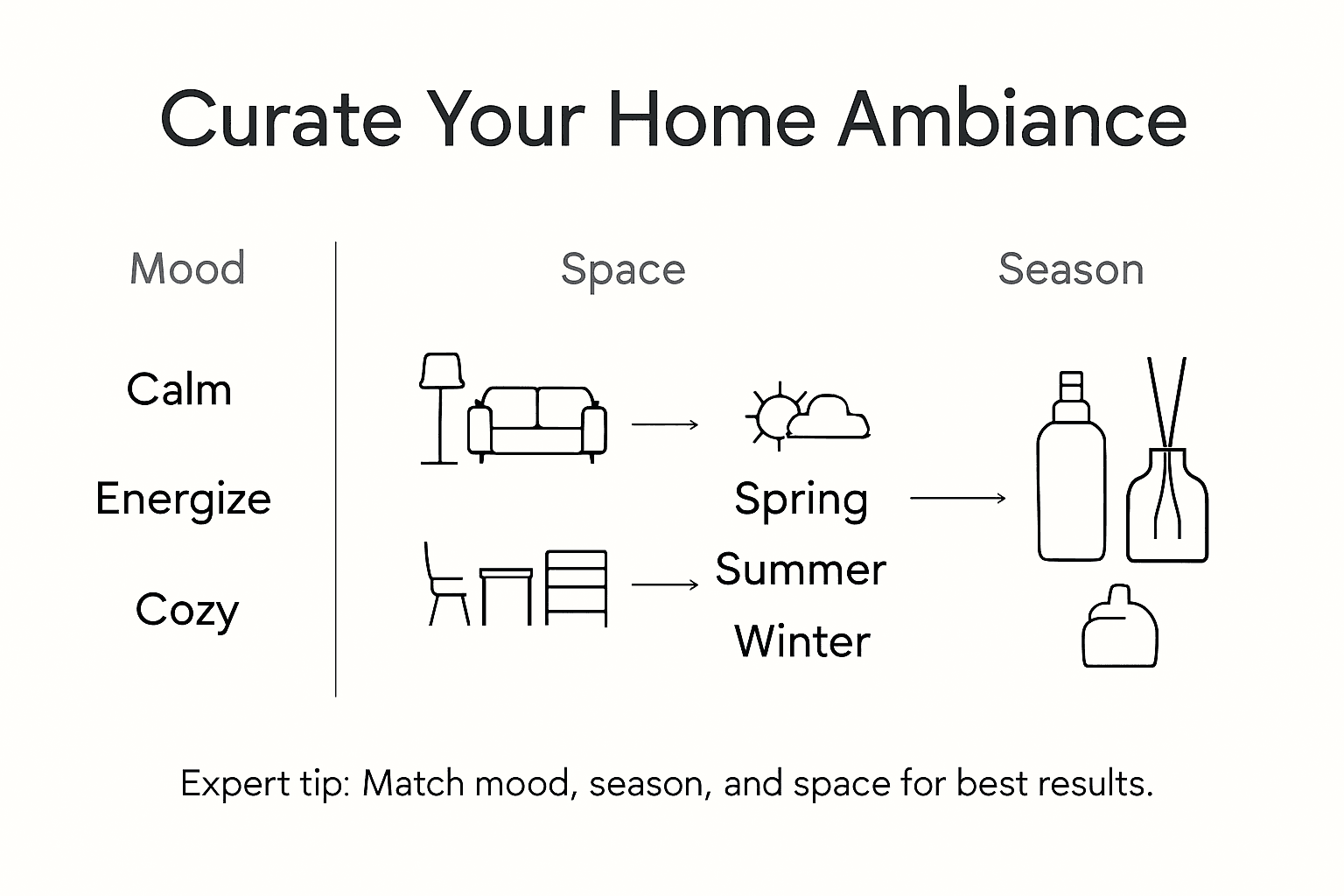
Each room in a home presents a unique opportunity for olfactory storytelling. Bedrooms might benefit from calming lavender and chamomile during winter months, while living spaces could feature crisp citrus and green notes during summer. The kitchen might embrace warm, inviting scents like vanilla or cinnamon, whereas home offices could utilize energizing notes like peppermint or eucalyptus to enhance focus and productivity. This intentional approach ensures that fragrances are not merely decorative but functional extensions of interior design.
The seasonal rotation of fragrances mirrors the natural rhythms of life, creating a dynamic sensory landscape that keeps home environments feeling fresh and responsive. Winter calls for rich, warming scents that create a sense of comfort and intimacy, while spring invites lighter, more botanical fragrances that reflect renewal. Summer scents should feel light and refreshing, and autumn fragrances can introduce deeper, more complex notes that echo the changing landscape outside.
Pro tip: Create a fragrance calendar that maps seasonal scent transitions, allowing you to proactively rotate and refresh your home’s olfactory environment every three months.
Common Pitfalls in Home Fragrance Curation
Home fragrance curation requires more than simply selecting pleasant scents; it demands a strategic and informed approach that considers multiple critical factors. Overlooking essential regulatory compliance can lead to significant safety issues and product reliability challenges, making it crucial for homeowners and fragrance enthusiasts to understand potential missteps in their sensory design process.
One of the most prevalent mistakes in home fragrance selection involves improper scent placement and intensity. Overwhelming spaces with conflicting or excessively strong fragrances can create sensory dissonance, disrupting the intended emotional atmosphere. Each room requires a nuanced approach, considering factors like size, ventilation, purpose, and existing environmental characteristics. A heavy musky scent might feel oppressive in a small bedroom, while the same fragrance could work beautifully in a spacious living area with high ceilings.
Storage and preservation of fragrances represent another critical area where many individuals make costly errors. Exposure to direct sunlight, extreme temperatures, or high humidity can dramatically degrade fragrance quality, reducing potency and altering molecular structures. Professional curators recommend storing scented products in cool, dark environments, away from windows and heat sources, to maintain their integrity and ensure consistent performance. Understanding the delicate nature of fragrance compounds helps prevent premature deterioration and preserves the intended sensory experience.
Pro tip: Invest in a dedicated fragrance storage solution with temperature and light control to protect your scent collection and maintain its original quality.
Elevate Your Home Ambiance with Expertly Curated Scents
The challenge of intentional fragrance curation is selecting the perfect scents that match your mood, season, and space without overwhelming your home environment. If you want to avoid common pitfalls like scent overload or poor storage while crafting a sensory experience that truly transforms your living space, Aromel Scents can help you achieve that goal. Explore our wide range of Candles and Diffusers designed for thoughtful layering and precise olfactory storytelling.

Start building your personalized fragrance collection today with our carefully selected Bundles that make scent layering effortless and enjoyable. Visit Aromel Scents now and take advantage of exclusive discounts plus free shipping on orders over $50. Transform your home into a sanctuary of mood-enhancing aromas by shopping our collections and curating your perfect scent wardrobe.
Frequently Asked Questions
What is fragrance curation?
Fragrance curation is the intentional selection and arrangement of scents to create specific emotions and atmospheres in home environments. It goes beyond mere aesthetic appeal to enhance well-being and personal identity.
How can I start fragrance curation in my home?
Begin by mapping out the emotional atmosphere you want to create in each room. Once you have a clear idea, select complementary scents that align with these emotions and consider using various formats like candles, diffusers, or essential oils.
What are the common home fragrance delivery methods, and how do they differ?
Common home fragrance delivery methods include scented candles, reed diffusers, room sprays, and essential oils. Each has its advantages: candles provide ambient lighting, diffusers continuously disperse scent, sprays offer quick changes, and essential oils allow for personalized blending.
How can I effectively layer scents in my home?
To effectively layer scents, start with a neutral base such as a scented lotion, then add complementary fragrances like perfumes or room sprays. The key is to choose fragrances that harmonize, allowing them to develop and interact without overwhelming the senses.